A beautiful rug can transform an ordinary room into a warm, inviting and well-designed space. It adds texture, comfort and colour while helping different furniture pieces feel connected. But even an expensive rug may look out of place if its size is not right.
One of the most common interior styling mistakes is choosing a rug that is too small for the room. A small rug floating in the middle of a large seating area can make the furniture look disconnected. On the other hand, a well-sized rug creates visual balance and makes the room feel more complete.
This rug size guide for every room will help you understand how to select the right rug for your living room, bedroom, dining area, hallway and other spaces. Whether you live in a compact Jaipur apartment or a spacious independent house, these practical tips will help you make a better choice.
A rug is not simply a decorative floor covering. It helps define a space and brings different elements of your interior together.
Here is why the correct rug size matters:
The most important principle is simple: choose a rug according to the furniture arrangement and the purpose of the space, not just the empty floor area.

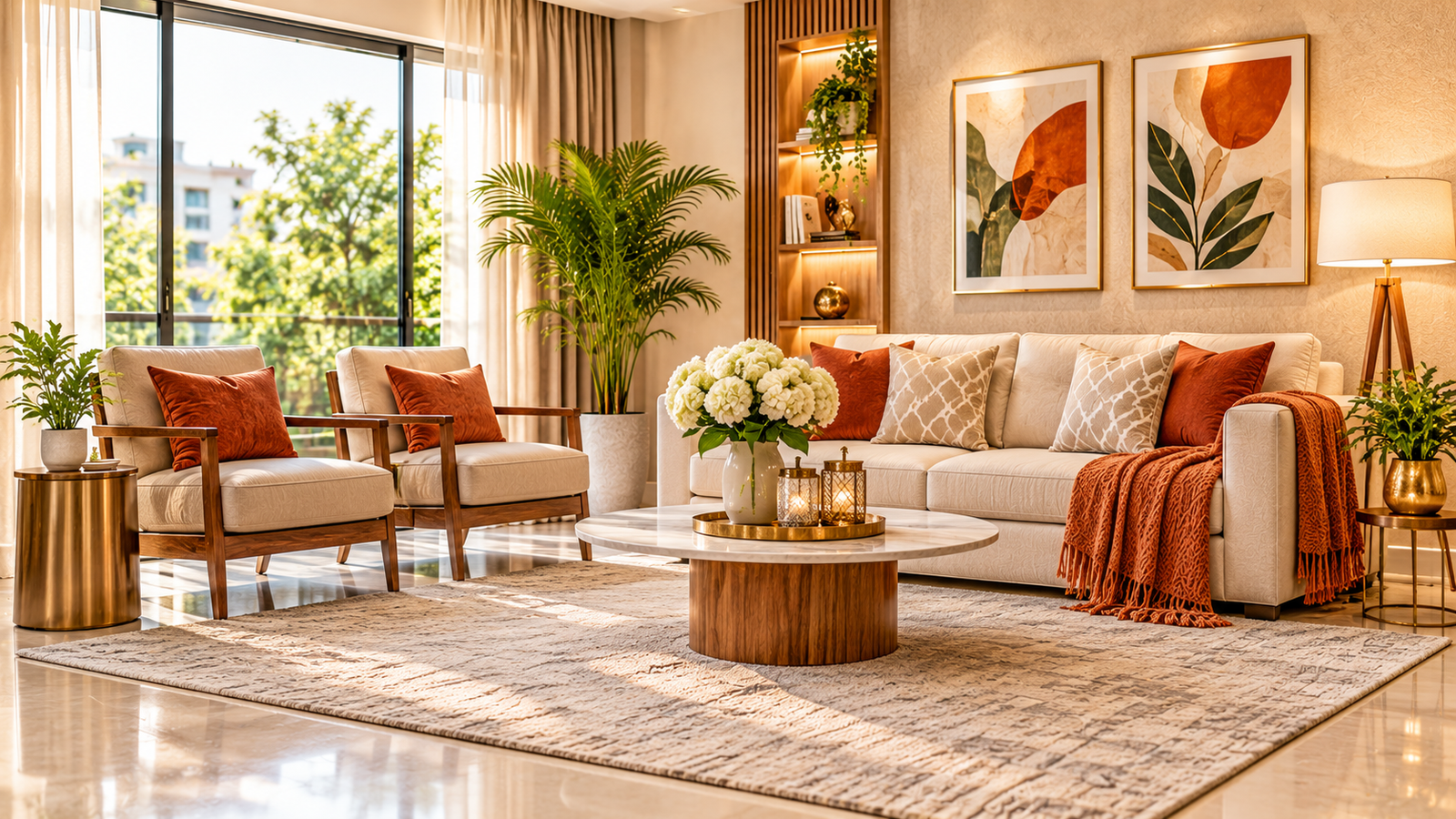
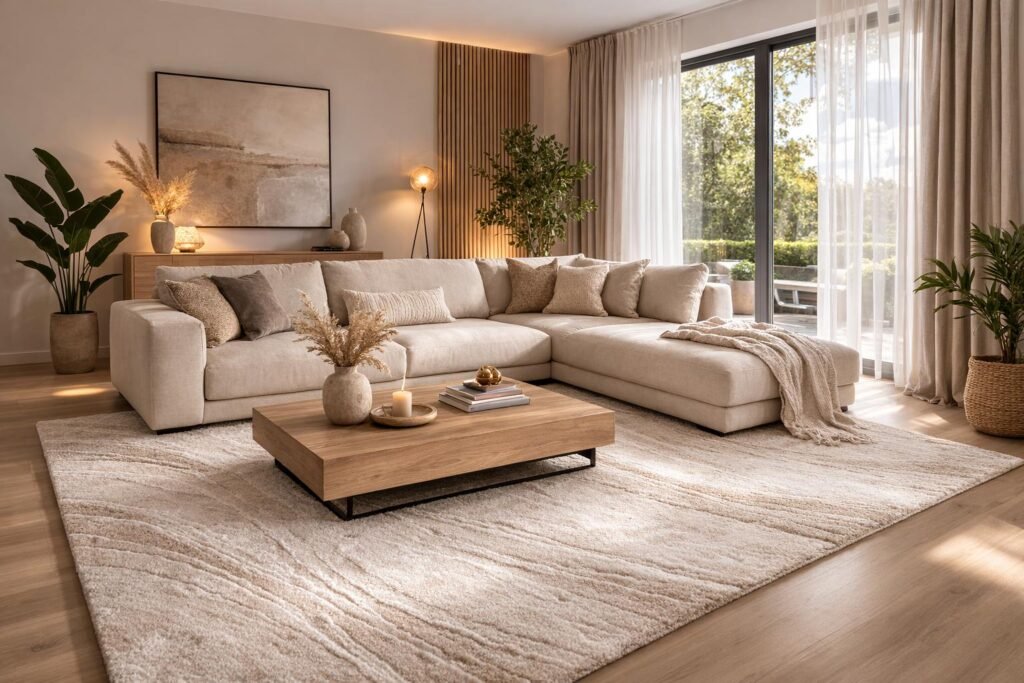
The living room is often the best place to introduce a statement rug. It brings the sofa, chairs and coffee table together and creates a defined seating arrangement.
There are three common placement styles:
All furniture on the rug
If you have a spacious living room, choose a rug large enough to accommodate the main sofa, chairs and coffee table. This arrangement creates a luxurious and unified appearance.
Front legs on the rug
This is a practical choice for many Indian homes. Place the rug under the front legs of the sofa and accent chairs while keeping the back legs on the floor. It visually connects the seating arrangement without covering the entire floor.
Coffee table area only
For a compact living room, a smaller rug can sit beneath the coffee table. Make sure it is proportionate to the table and seating arrangement rather than appearing like an isolated mat.
| Rug size | Suitable use |
|---|---|
| 4 × 6 ft | Small seating corner or accent area |
| 5 × 8 ft | Compact living room |
| 6 × 9 ft | Medium-sized seating arrangement |
| 8 × 10 ft | Larger living room |
| 9 × 12 ft | Spacious living room with multiple seating pieces |
These are starting points, not fixed rules. Always measure your furniture before selecting the final size.

A bedroom rug should make the space feel comfortable and relaxing. Ideally, it should provide a soft landing for your feet when you get out of bed.
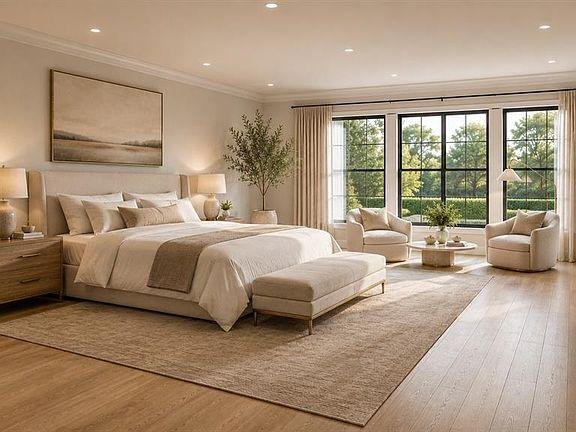
Under the bed: Place a large rug beneath the bed so that it extends beyond both sides and the foot of the bed. This creates a balanced and comfortable look.
At the foot of the bed: If you do not want to cover a large floor area, use a rug near the foot of the bed. It can add colour and texture without making the room feel crowded.
Two bedside runners: In a compact bedroom, two matching runners on either side of the bed can be a practical alternative to one large rug.
| Bed type | Suggested starting size |
|---|---|
| Single bed | 4 × 6 ft or a suitable runner |
| Queen bed | 8 × 10 ft |
| King bed | 9 × 12 ft |
Check the bed frame, bedside tables, available floor space and door movement before finalising the dimensions.

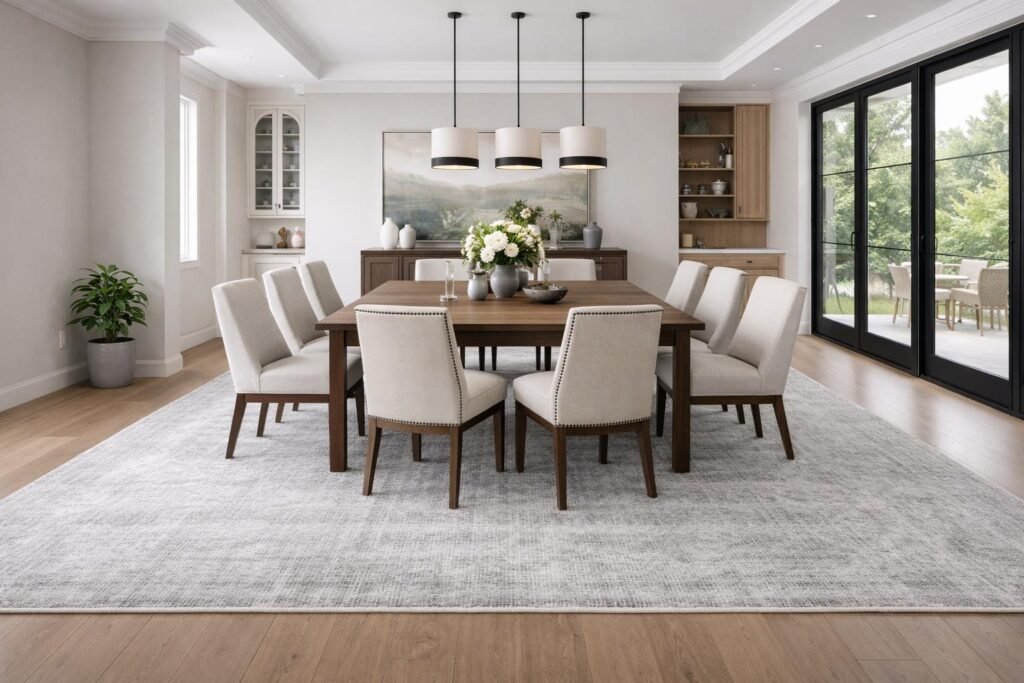
A rug under the dining table can make the dining area feel elegant and well-defined. However, size is especially important here because chairs need enough room to move.
The rug should extend approximately 24 inches (around 60 cm) beyond the table on every side as a useful starting point. This allows dining chairs to remain on the rug when pulled out.
For example, a rectangular dining table measuring approximately 6 × 3 ft may need a rug around 10 × 7 ft when allowing roughly two feet on each side. Confirm the actual chair movement and room clearance before buying.

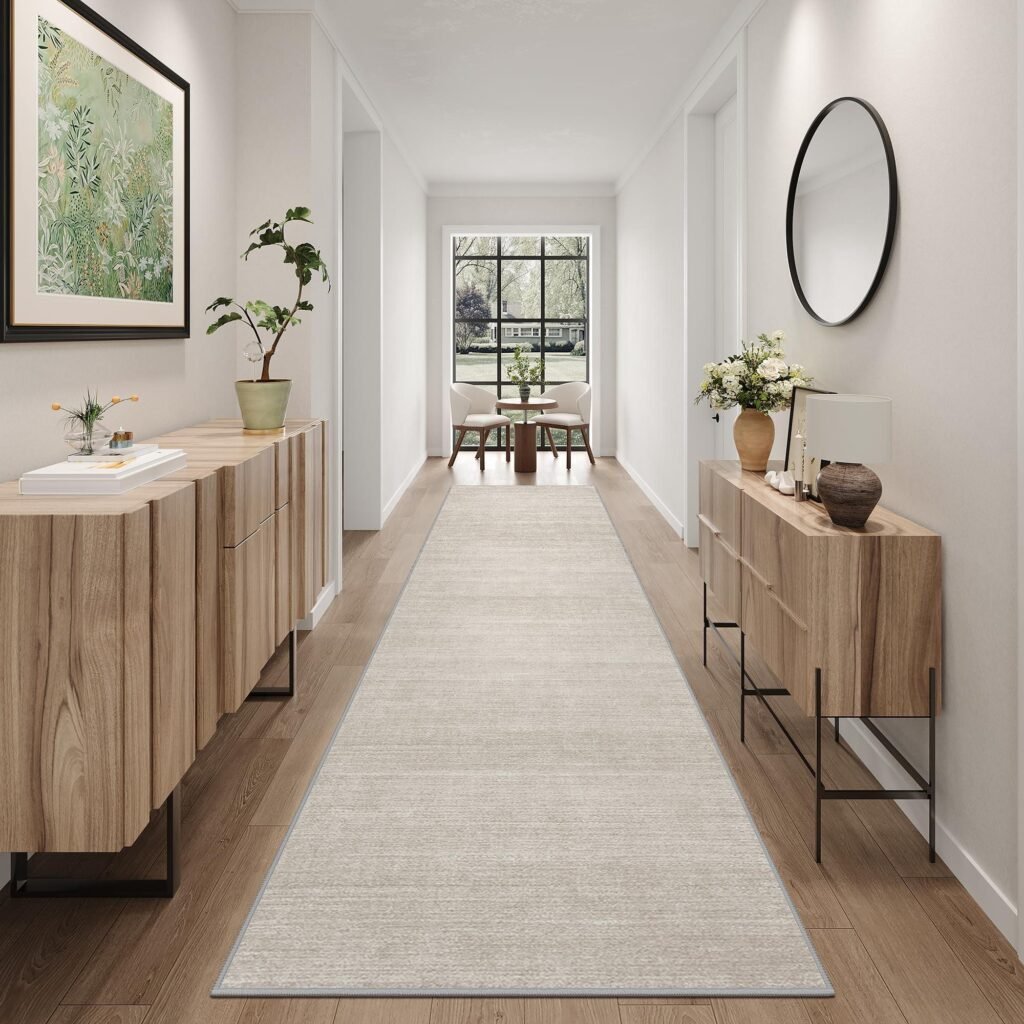
Hallways and entrance areas often have limited floor space, so a runner rug can be a better choice than a large rectangular rug.
A runner adds visual interest and can make a long passage feel more welcoming.
Consider these tips:
For an entrance, a compact accent rug or door mat may be more practical than a large decorative rug.
Size is important, but shape also affects how a rug looks in a room.
Rectangular rugs are versatile and work well under sofas, beds and dining tables. They are a popular choice for most living rooms and bedrooms.
Round rugs can soften rooms with straight furniture lines. They work particularly well under round dining tables, in reading corners and in small seating areas.
Square rugs can complement symmetrical furniture arrangements and square rooms. They are also useful for creating a defined seating zone.
Runner rugs are long and narrow. They are suitable for hallways, passages, bedside spaces and some kitchen layouts.
Choose a shape that complements the room’s furniture and layout instead of selecting one only because it looks attractive in a product photograph.
The material affects how a rug feels, how it looks and how much maintenance it needs.
Wool rugs offer a soft, comfortable feel and can work well in living rooms and bedrooms. Follow the manufacturer’s cleaning instructions to maintain their appearance.
Cotton rugs can be lightweight and suitable for casual spaces. Their cleaning requirements depend on the construction and care label.
Some synthetic options are practical for busy homes because they can be easier to maintain. Check the fibre, backing, construction and cleaning instructions before purchasing.
Flat-weave rugs generally have a lower profile, making them useful in dining spaces and other areas where chairs or furniture need to move easily.
There is no single best material for every home. Consider foot traffic, children, pets, spills, cleaning preferences and the room’s overall design.
The right colour and pattern can complement your furniture, wall colours and flooring.
For a balanced look, consider these combinations:
In Jaipur homes, where natural light and warm interior tones are common design considerations, you can experiment with earthy shades, muted terracotta, beige and natural-looking textures. Always compare the rug with your actual flooring and upholstery before making a final decision.
Before purchasing a rug, avoid these common mistakes:
A little preparation can prevent an unsuitable purchase.
Follow these steps:
Step 1: Identify the area
Decide whether the rug will define a seating arrangement, sit under a bed or cover the dining area.
Step 2: Measure the furniture
Measure the length and width of the sofa arrangement, bed or dining table.
Step 3: Mark the proposed rug size
Use masking tape to outline the rug dimensions on the floor. This helps you understand how much space it will occupy.
Step 4: Check walking space
Make sure there is enough room to move comfortably around furniture and that doors can open properly.
Step 5: Compare colours and textures
Check samples or product photographs against your flooring, curtains, upholstery and wall colours.
Step 6: Confirm the final dimensions
Do not rely only on standard size labels. Confirm the actual dimensions, shape and available customisation options before ordering.
The right rug can make a noticeable difference to the comfort and appearance of your interiors. From creating a welcoming living room to adding warmth to a bedroom, selecting the right dimensions, material, colour and pattern is essential.
At Interior World, you can explore a range of rug styles, including classic designs and modern patterns. The collection page also highlights options for customised sizes and shapes, helping you find a rug that suits your room layout and interior preferences.
Explore the Rugs Collection at Interior World and discover options for your home.
For personalised guidance, contact Interior World to discuss your space, design preferences and rug requirements.
The right size depends on your seating arrangement. A 5 × 8 ft rug may suit a compact space, while 8 × 10 ft or 9 × 12 ft can be suitable starting points for larger living rooms.
A 9 × 12 ft rug is a common starting point for a king-size bed. Check the room dimensions and how much rug you want visible around the bed before choosing.
Ideally, the front legs of the sofa and other main seating pieces should rest on the rug. In larger rooms, you can place all the main furniture legs on it.
As a practical guideline, allow around 24 inches (60 cm) beyond each edge of the table so chairs remain on the rug when pulled out.
A durable, low-pile or flat-weave rug may be more practical for busy areas. Check its cleaning instructions, backing and suitability for your floor.
Yes. Round rugs can work well in reading corners, compact seating arrangements and rooms with round coffee tables. The size should still be proportionate to the furniture.
Choose a rug that connects the main furniture pieces without overwhelming the floor. A balanced colour palette and a suitable rug size can help the room feel more organised and spacious.
Final Tip: Always measure your furniture and mark the proposed rug dimensions on the floor before purchasing. The right size can make even a simple rug look like a thoughtful part of your interior design.
Leave A Comment