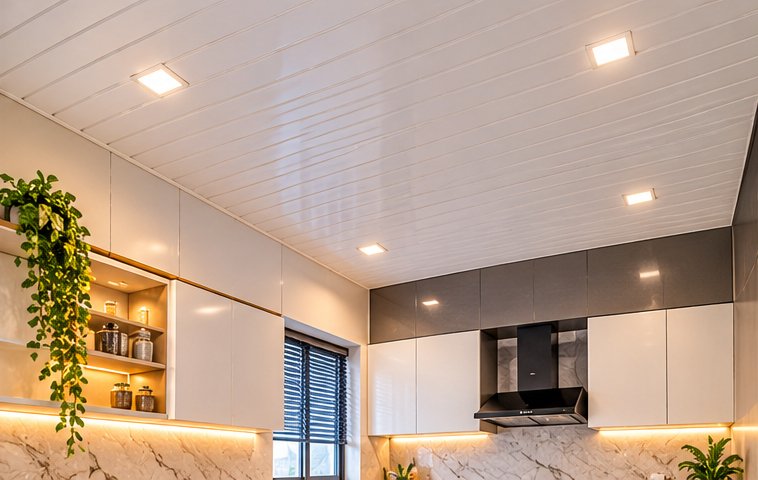
A well-designed ceiling can completely transform the appearance of a room. While homeowners often focus on furniture, wall colours, flooring and decorative accessories, the ceiling is equally important in creating a beautiful interior.
Modern false ceilings are no longer limited to decorative patterns. They can combine attractive finishes with practical lighting arrangements, concealed wiring and a clean architectural appearance. From simple POP borders to contemporary gypsum ceilings and PVC ceiling panels, homeowners have several options to explore.
However, choosing the right design requires more than selecting an attractive photograph. Room dimensions, ceiling height, lighting requirements, material quality and maintenance should all be considered before installation.
In this guide, we explore the best false ceiling design ideas for Indian homes, including modern living room designs, bedroom ceilings, small-space solutions, material comparisons and useful installation tips.
A false ceiling is a secondary ceiling installed below the original structural ceiling. It is generally supported by a framework and creates space for electrical wiring, lighting fixtures and selected building services.
False ceilings are commonly used in residential and commercial interiors because they provide a neat and finished appearance.
Some important benefits include:
A false ceiling does not automatically solve leakage, insulation or soundproofing problems. These requirements need suitable materials and professional planning.

The living room is one of the most important spaces in a home. It is where family members spend time together and guests are welcomed. A thoughtfully designed ceiling can make this area look more elegant and organised.
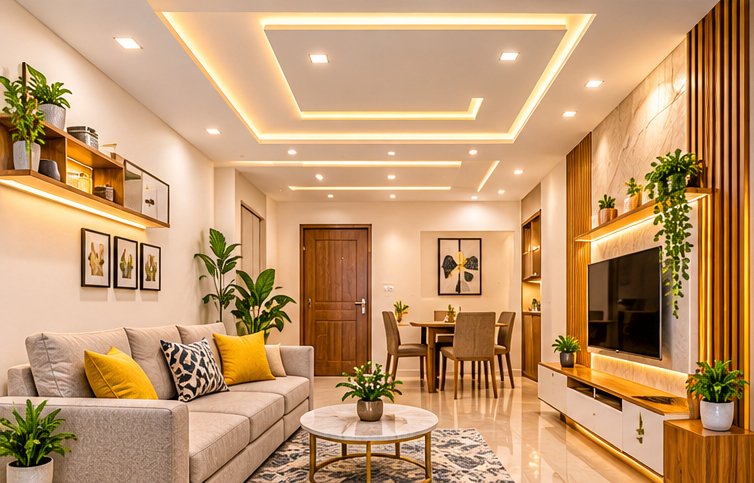
A simple rectangular border is one of the most versatile choices for modern homes. It creates a defined ceiling pattern without making the room look overly decorative.
You can combine it with concealed LED strip lighting or recessed spotlights to create a soft and balanced appearance.
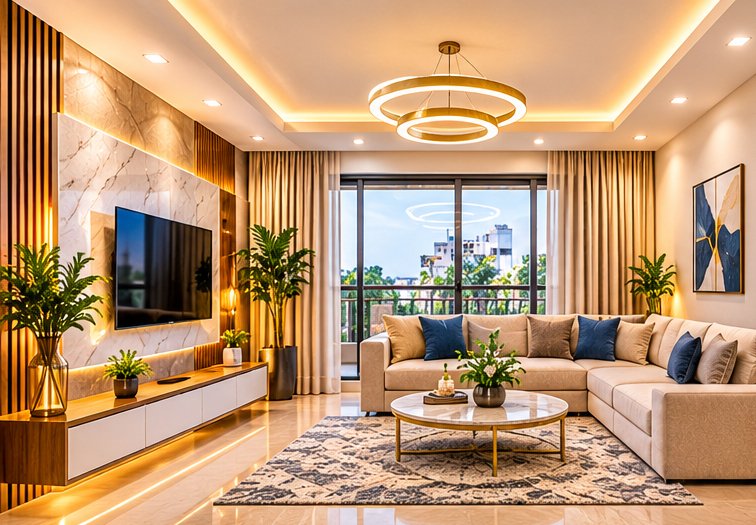
A tray ceiling features a recessed central section or a defined perimeter. It adds depth to the ceiling and can create an attractive visual effect.
This design works well in medium and large living rooms where sufficient ceiling height is available.
Wooden-finish ceiling panels can introduce warmth and texture into a living room. They can complement wooden furniture, TV units and decorative wall panels.
Instead of covering the entire ceiling, a limited wooden accent can create a sophisticated appearance.
If you prefer simple interiors, a minimalist ceiling with clean lines and carefully positioned lights can be an excellent choice.
It is particularly suitable for contemporary apartments where maintaining an open and uncluttered appearance is important.

A bedroom should feel comfortable, peaceful and relaxing. Therefore, bedroom ceiling designs should focus on balanced lighting and simple decorative details.
Here are some popular ideas:
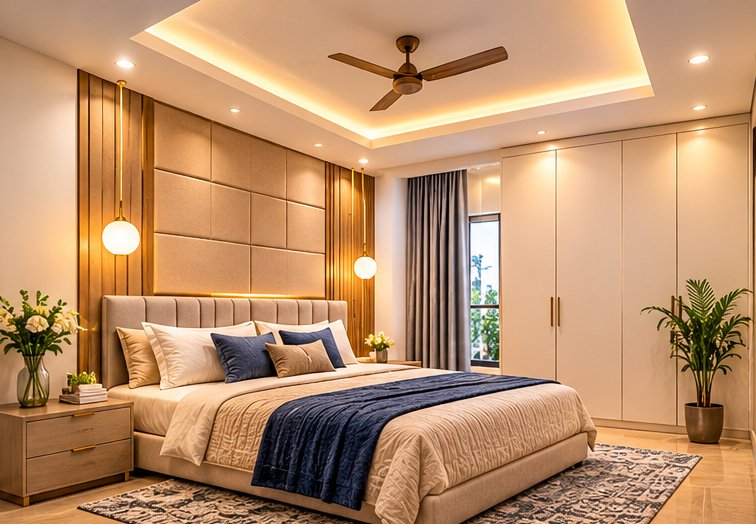
Soft Cove Lighting: Concealed warm lighting around the ceiling border can create a relaxing atmosphere.
Simple Perimeter Ceiling: A slim border can frame the ceiling while keeping the central section uncluttered.
Headboard-Aligned Design: A small ceiling feature above the bed can visually connect with the headboard wall.
Wooden Finish Ceiling: A limited wooden-finish section can add warmth and complement bedroom furniture.
Minimal Recessed Lighting: Recessed fixtures can provide functional illumination without making the ceiling look crowded.
For a comfortable bedroom, consider separate controls for general lighting and ambient lighting.

Compact apartments require special attention because every inch of available space matters.
A heavily layered ceiling may look attractive in a large house, but it can make a small room feel enclosed. Simple designs are often more suitable.
A useful approach is to create decorative ceiling sections only where lighting integration or visual emphasis is required.

Kitchen ceilings require a more functional approach because cooking areas can experience heat, steam, grease and humidity.
Before choosing a material, consider ventilation, exhaust systems, cleaning requirements and lighting.
A clean and simple ceiling is often more practical for everyday kitchen use than a heavily decorative design.
The material you select affects the appearance, installation process, durability and maintenance of the ceiling.
POP is commonly used for decorative ceiling designs. It can be shaped into different patterns, curves and borders.
Advantages:
Things to consider:
Gypsum boards are widely used in modern suspended ceiling systems. They provide a smooth surface and are suitable for contemporary ceiling designs.
Advantages:
Things to consider:
PVC panels are available in different colours, patterns and decorative finishes. They are used in selected residential and commercial applications.
Advantages:
Things to consider:
Wooden finishes add natural warmth and texture to an interior. They can be used as a full ceiling treatment or as a decorative accent.
Advantages:
Things to consider:
Lighting is one of the biggest reasons homeowners choose false ceilings. A good lighting plan should combine functionality and ambience.
Cove lighting uses concealed light sources to create indirect illumination. It can produce a soft glow around ceiling borders or recessed sections.
These fixtures are installed within the ceiling and provide focused illumination. They can be used for general lighting or to highlight selected areas.
Linear LED lights create clean lines and suit contemporary interiors. They can highlight ceiling geometry or define specific zones.
Decorative lights can create a focal point above dining tables or seating areas. Their placement should be planned according to room dimensions and ceiling design.
Warm lighting often creates a relaxed atmosphere, while neutral or cooler lighting may be preferred for task-oriented spaces.
Before installation, decide the position of every fixture, lighting controls and maintenance access.
Before finalising a design, consider these important factors:
1. Room Height: Measure the existing ceiling height and understand how much height the proposed structure will reduce.
2. Room Dimensions: Select a design that complements the size of the room. Large decorative patterns may overwhelm compact spaces.
3. Lighting Requirements: Decide where you need general, task and ambient lighting.
4. Material Suitability: Select materials according to moisture exposure, usage and product specifications.
5. Maintenance Access: Keep access to wiring, drivers, junctions and service points in mind.
6. Interior Theme: Coordinate the ceiling with furniture, flooring, wallpapers, curtains and wall finishes.
7. Budget: Get a detailed quotation covering material, framework, finishing, lighting, electrical work and installation charges.
Even an attractive ceiling design can become inconvenient if important practical details are ignored.
Avoid these common mistakes:
A practical design that suits the room will usually provide a better long-term result than an unnecessarily complicated ceiling.
Before starting your ceiling project, follow this checklist:
Proper planning can help avoid unnecessary modifications during installation.
A well-planned ceiling can make your home feel more refined, comfortable and visually complete. Whether you prefer a minimalist border, a warm wooden accent or a contemporary ceiling finish, the right choice should suit your room dimensions and everyday requirements.
Interior World offers a range of interior products, including PVC panels and false ceiling solutions, along with flooring, wallpapers, curtains, blinds and other home décor products.
Explore the Interior World website to discover its product range.
For personalised assistance, contact Interior World to discuss your interior requirements.
A simple perimeter border, shallow tray design or minimal recessed lighting arrangement can work well. The design should preserve as much usable ceiling height as possible.
Both can be suitable depending on the design and application. POP offers flexibility for decorative shapes, while gypsum boards are commonly used for smooth and clean ceiling finishes.
PVC ceiling panels can be suitable for selected residential applications. Check the manufacturer’s specifications, fire-performance information, temperature suitability and installation requirements.
Yes. A false ceiling is installed below the original ceiling, so it reduces the available vertical space. The amount depends on the framework, material and design.
A combination of general lighting, recessed fixtures and concealed cove lighting can create a balanced result. The right combination depends on room size and lighting requirements.
Yes, but materials and fixtures must be suitable for the kitchen environment. Consider heat, steam, ventilation, cleaning and service access before installation.
Follow the manufacturer’s cleaning and maintenance instructions. Periodically inspect for cracks, stains, sagging or moisture damage. Investigate the cause of water marks instead of simply covering them.
Final Thought: The best false ceiling is one that looks elegant, supports comfortable lighting and suits the actual dimensions of your home. Keep the design practical, select suitable materials and plan every detail before installation.
Leave A Comment