Lighting is one of the most important elements of interior design, yet it is often planned at the last stage of home construction or renovation. Many homes rely on a single bright ceiling light to illuminate an entire room. While this may provide basic visibility, it rarely creates the warmth, comfort and visual depth that make a home feel beautifully designed.
This is where layered lighting design for Indian homes makes a difference. Instead of depending on one light source, layered lighting combines different types of illumination to make a space functional, comfortable and visually attractive.
From a welcoming living room and a relaxing bedroom to a practical kitchen and an elegant dining area, the right lighting arrangement can completely transform the way your home looks and feels.
In this guide, we will explore the three main layers of lighting, room-wise lighting ideas, colour temperatures, practical planning tips and common mistakes to avoid.
Layered lighting is the process of combining multiple light sources to serve different purposes within the same room. Each light has a specific role, and together they create a balanced lighting environment.
A well-planned lighting scheme generally includes three essential layers:
You can also introduce decorative lighting, such as chandeliers and statement pendants, to add personality to the room.
The biggest advantage is flexibility. You can use brighter lighting while working or cleaning and softer lighting when relaxing in the evening.
Ambient lighting is the main source of illumination in a room. It provides general brightness and makes it comfortable to move around.
Common ambient lighting options include:
For Indian homes, ambient lighting should be planned according to room size, ceiling height, natural daylight and the activities performed in the space.
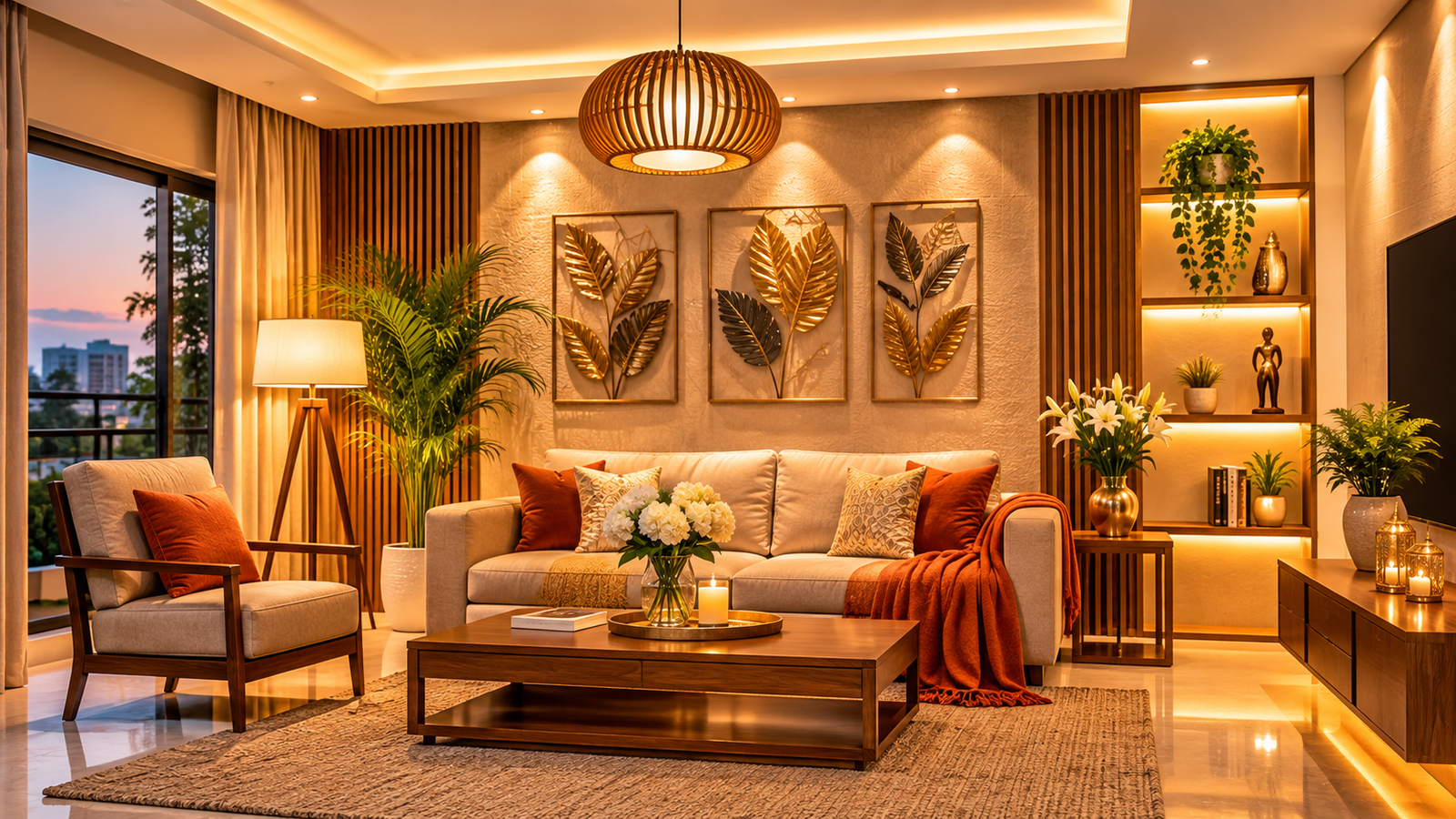
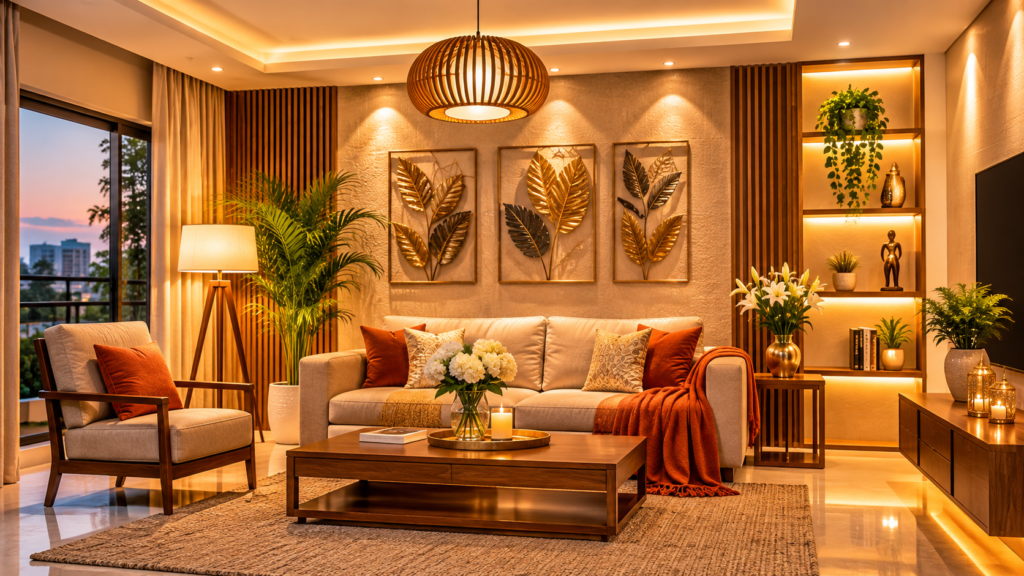
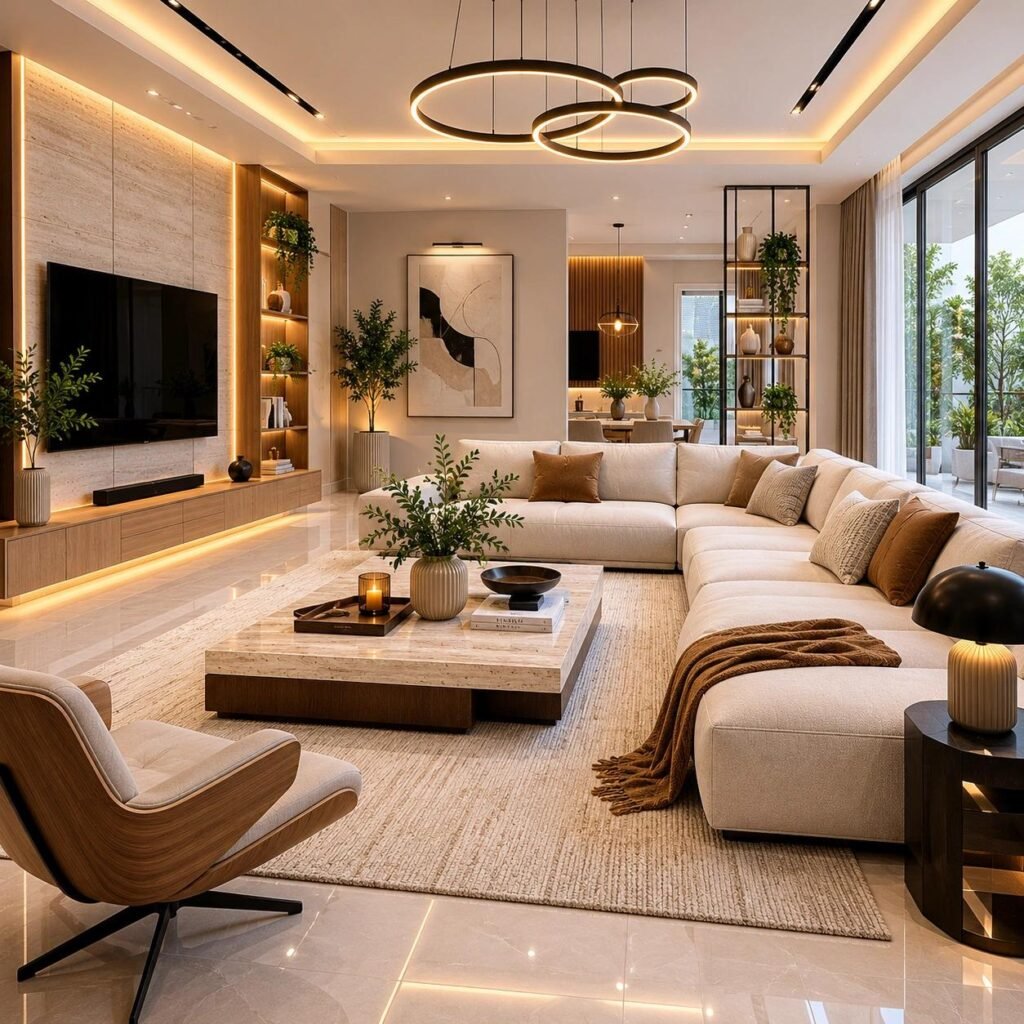
In a living room, combine ceiling lights with indirect cove lighting for a balanced appearance. In bedrooms, choose softer general illumination instead of overly bright lights. Kitchens and study areas may require stronger and more uniform lighting.
Design tip: Avoid placing too many powerful downlights in a small room. A balanced arrangement usually looks more comfortable than a ceiling filled with identical bright spots.
Task lighting provides focused illumination for activities that require better visibility. It reduces shadows and makes everyday tasks more comfortable.
Popular task lighting options include:
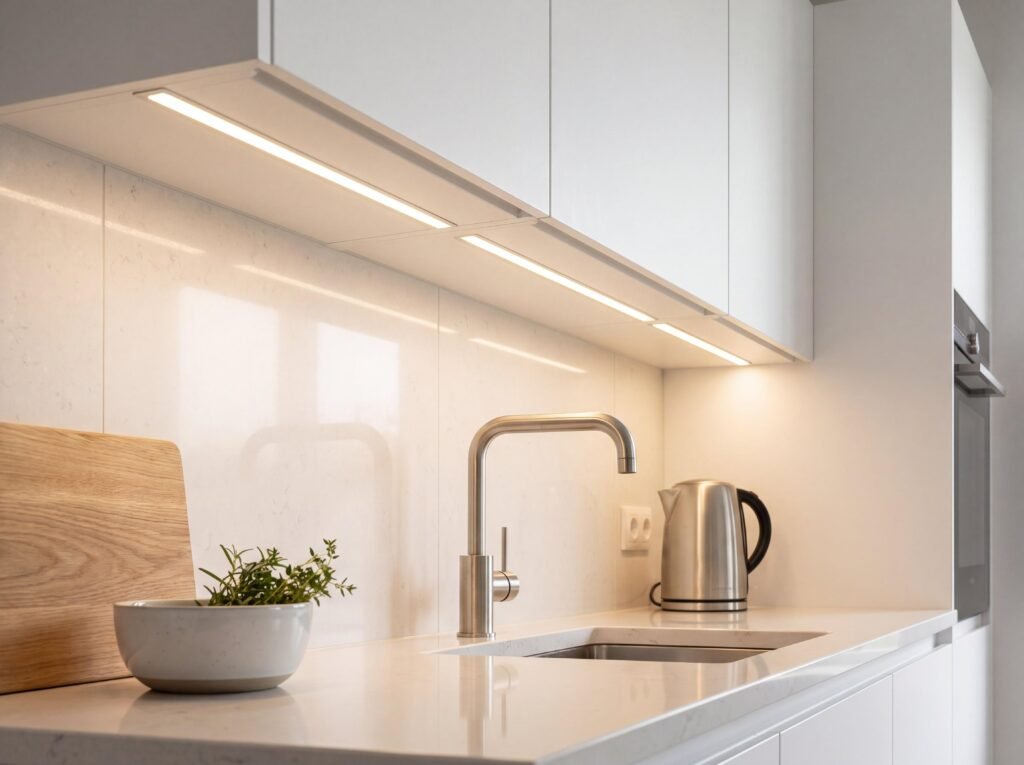
Kitchen: Install under-cabinet lights to illuminate countertops where you prepare food. Make sure the light does not create shadows over the working surface.
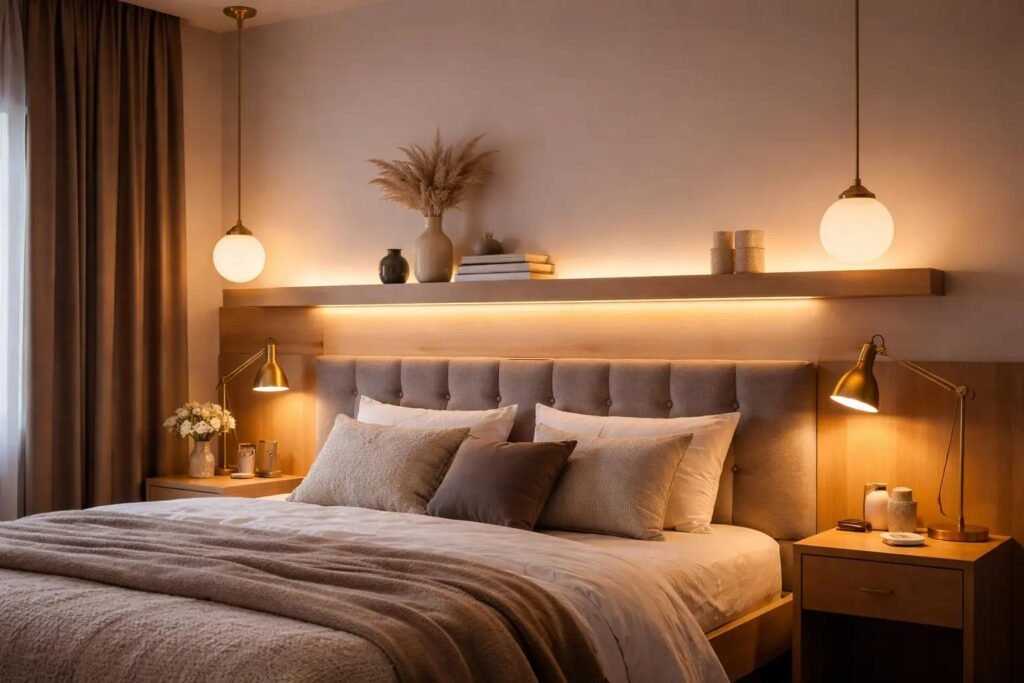
Bedroom: Use bedside lamps or adjustable wall lights for reading. This also allows one person to read without illuminating the entire room.
Study room: Place a desk lamp so that your hand does not cast a shadow over your work. Choose a comfortable light level and avoid direct glare on screens.
Bathroom: Mirror-side lighting can provide more even illumination for grooming than a single light placed directly above the mirror.
Accent lighting draws attention to specific features and creates depth in an interior.
It can highlight:
Common options include adjustable spotlights, picture lights, wall washers, LED strips and concealed shelf lighting.
A textured TV wall can look more attractive with carefully positioned wall washers. LED strips inside display shelves can highlight decorative objects, while spotlights can bring attention to artwork.
Use accent lighting selectively. Highlighting every wall and object can make the room visually busy. Choose a few features that deserve attention.
Decorative lighting combines illumination with visual appeal. These fixtures often become an important part of the interior design even when they are switched off.
Some popular options include:
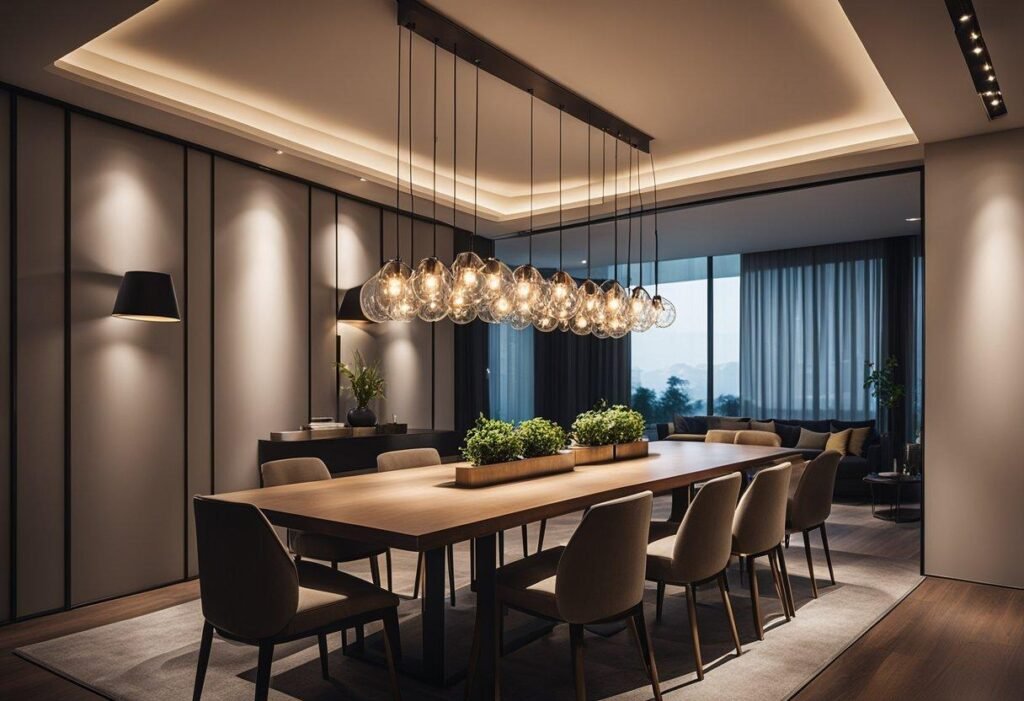
A statement pendant above a dining table or a floor lamp beside a reading chair can create a strong focal point.
Tip: Choose a decorative fixture that complements your furniture, ceiling height and overall interior theme. A large chandelier may look impressive in a spacious room but can overwhelm a compact apartment.

The living room is usually a multifunctional space. Families use it for conversations, watching television, entertaining guests and relaxing.
A combination of lighting layers makes it easier to adapt the room to different activities.
Consider these ideas:
For a cosy evening atmosphere, reduce the ambient light and use table lamps or accent lighting. For family gatherings and cleaning, brighter general lighting may be more suitable.
Bedroom lighting should support relaxation while also providing enough brightness for daily activities.

Useful lighting ideas include:
Avoid depending only on a bright central ceiling fixture. A combination of soft ambient light and bedside task lighting gives you greater control.
If you have a dressing area, consider dedicated mirror lighting so that your face is illuminated evenly.
Kitchen lighting needs to be functional, safe and easy to maintain. Shadows on countertops can make cooking inconvenient, so task lighting is particularly important.

A practical arrangement can include:
Choose fixtures suitable for the kitchen environment and keep them away from excessive heat, steam and water exposure. Electrical installation should be handled by a qualified professional.
The dining area benefits from lighting that makes the table a visual focal point.
A pendant light or chandelier positioned above the dining table can create a defined dining zone, especially in open-plan homes.
For a balanced look:
The goal is to make the dining area feel inviting without making the light excessively bright.

Colour temperature influences how a room feels. It is measured in Kelvin (K).
| Colour temperature | Appearance | Suitable use |
|---|---|---|
| 2700K–3000K | Warm white | Bedrooms, living rooms, relaxing spaces |
| Around 4000K | Neutral white | Kitchens, study areas, utility spaces |
| 5000K and above | Cool daylight appearance | Selected task-oriented areas where brighter, cooler light is preferred |
These are useful starting points, not strict rules. The right choice depends on wall colours, materials, daylight, personal preference and the activity in the room.
Try to maintain visual consistency within connected spaces. Also check the colour rendering quality of the light source, especially where accurate colour appearance matters.
Small apartments need lighting that makes spaces feel open without creating visual clutter.
Try these practical ideas:
In compact rooms, thoughtful placement is often more effective than simply increasing the number of fixtures.
Even attractive fixtures may not produce a comfortable result if the lighting plan is poorly designed.
Using only one central light: It creates flat illumination and may leave important areas in shadow.
Ignoring task lighting: Worktops, study tables and reading corners need focused light.
Choosing the wrong colour temperature: Very cool light in a relaxing bedroom may feel uncomfortable to some people.
Creating too much glare: Poorly positioned spotlights and exposed light sources can cause visual discomfort.
Overusing LED strips: Too many visible strips can make an interior look cluttered. Use them to highlight selected features.
Not planning switches in advance: Separate lighting circuits and controls should be considered before electrical work is completed.
Ignoring maintenance: Choose accessible fixtures and quality components so that cleaning and replacement are manageable.
A good lighting plan begins before the final electrical work.
Follow this simple checklist:
Planning early helps avoid unnecessary rewiring and makes the final interior more cohesive.
A beautifully designed home is not only about furniture, colours and decorative accessories. Lighting plays an equally important role in creating the right atmosphere and making everyday activities comfortable.
By combining ambient, task, accent and decorative lighting, you can create interiors that look attractive during the day and feel warm and welcoming at night.
Whether you are designing a new home or renovating an existing one, a thoughtful layered lighting design for Indian homes can make every room more functional, flexible and visually appealing.
Explore more interior solutions with Interior World or contact our team to discuss your interior requirements.
Layered lighting combines ambient, task and accent lighting to make a room functional, comfortable and visually attractive. Decorative lighting can also be added for style.
The three main types are ambient lighting for general brightness, task lighting for specific activities and accent lighting to highlight selected features.
A combination of ambient ceiling lights, floor or table lamps and accent lighting works well in most living rooms. The exact arrangement depends on room size and usage.
Warm white is commonly preferred for relaxing bedroom environments. However, personal preference, wall colours and the type of activity should also be considered.
Warm white around 2700K–3000K is a useful starting point for relaxing areas, while neutral white around 4000K may suit kitchens and workspaces.
Use compact fixtures, wall lights, concealed lighting and focused task lights. Avoid oversized decorative fixtures and excessive ceiling spotlights.
Not necessarily. Separate controls for ambient, task and accent lighting provide more flexibility and allow you to create different lighting moods.
Leave A Comment