Working from home has changed the way people use their living spaces. A corner of the bedroom, a small area beside a window or even an unused wall can become a comfortable workspace with the right planning.
However, a productive home office needs more than just a table and a chair. Furniture selection, lighting, storage, colour combinations and room layout all play an important role in creating an environment that supports concentration and everyday comfort.
The good news is that you do not need a separate room to create a beautiful workspace. With smart furniture and thoughtful interior design, even a compact Indian apartment can accommodate a practical home office.
In this guide, we will explore home office design ideas for Indian homes, including small workspace layouts, ergonomic furniture, storage solutions, lighting arrangements and decorative elements.
The first step in designing a home office is selecting the right location. Ideally, choose an area with sufficient natural light, limited disturbance and enough space for your desk and chair.
You do not necessarily need a dedicated room. Consider these possibilities:
If possible, select a location away from television noise, kitchen activity and frequently used passageways.
Natural daylight can make a workspace feel more comfortable and welcoming. Position your desk near a window if practical, while avoiding direct glare on your computer screen.
If your room has limited daylight, use a suitable combination of ambient and task lighting.
Design tip: Keep enough space around your desk to move comfortably. A beautiful workspace should not obstruct the normal movement of people around the home.
Furniture is one of the most important investments in a home office. Since you may spend several hours working, your desk and chair should support a comfortable posture.
A good desk should provide sufficient space for your laptop, monitor, keyboard and everyday accessories.
Popular options include:
A desk around 120–140 cm wide can be a useful starting point for a typical workstation, but the right size depends on your equipment and available space.
Avoid choosing a chair based only on appearance. Look for features such as:
Your feet should rest comfortably on the floor, and your elbows should remain close to your body while typing.
A properly adjusted workstation can help reduce unnecessary physical discomfort during long working sessions.
Many Indian apartments do not have a separate study room. This makes space-efficient furniture and creative layouts especially useful.
Here are some practical solutions.
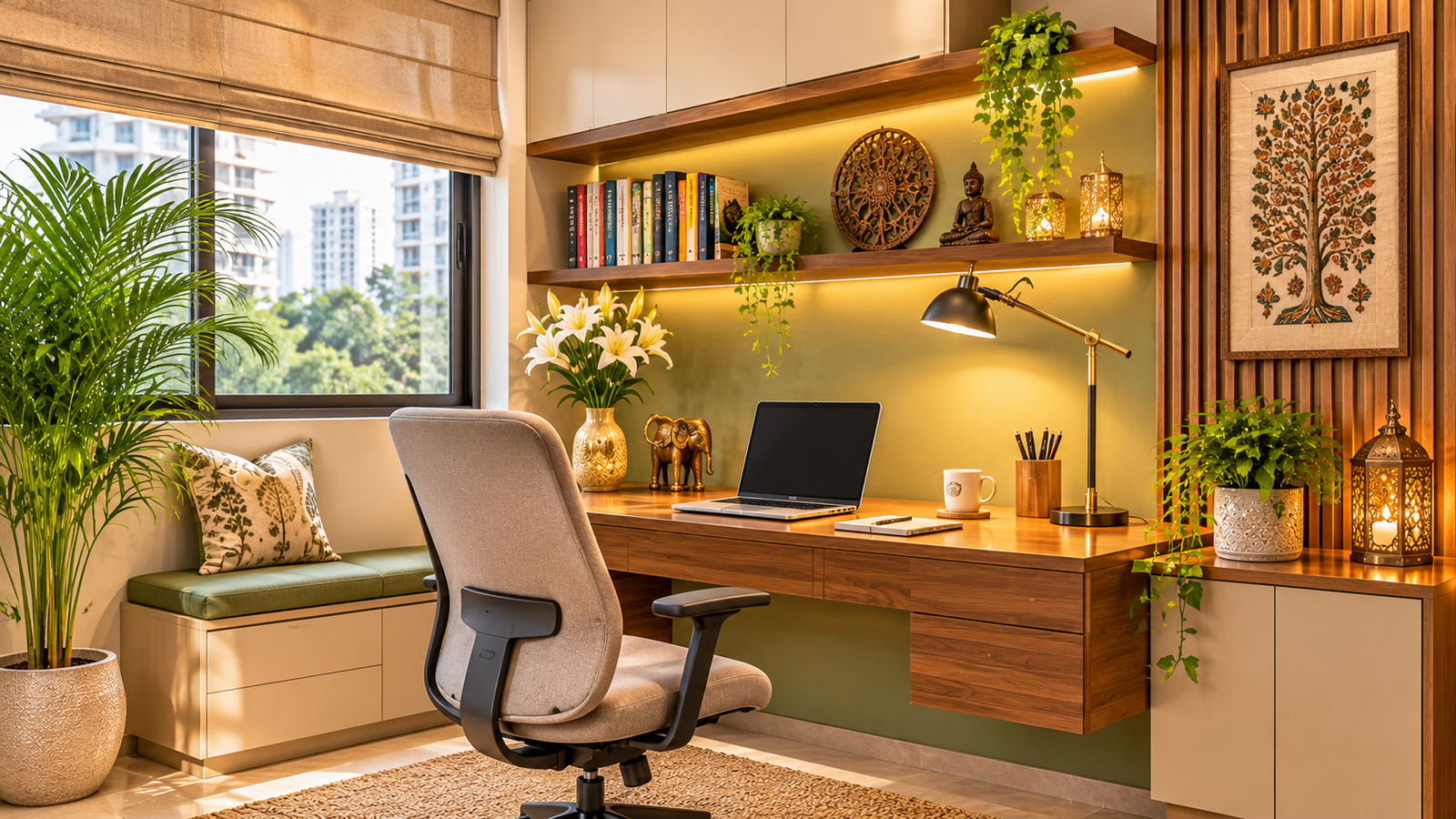
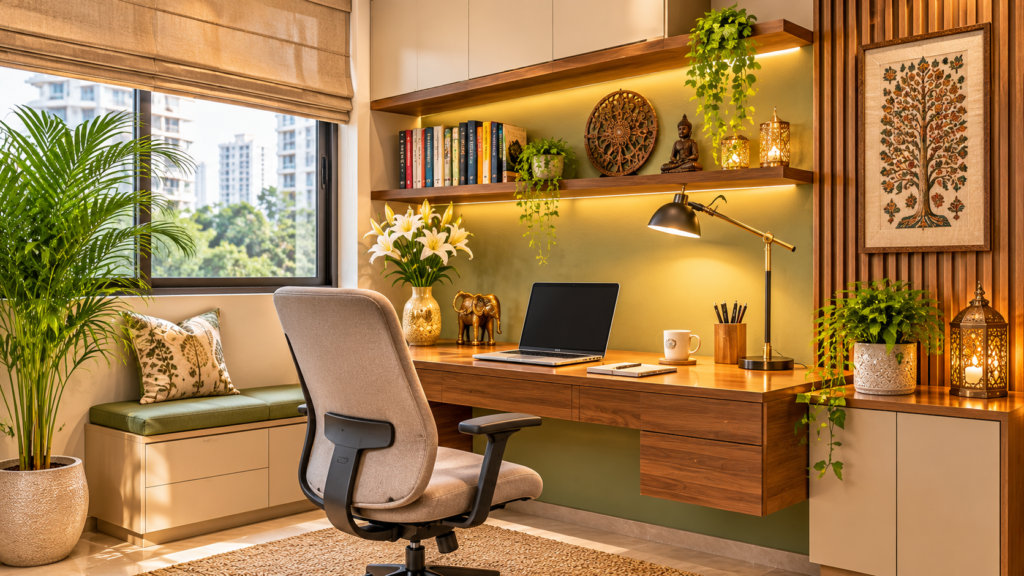
A wall-mounted desk is a smart option when floor space is limited. It can be installed in a bedroom, living room or unused corner.
Some designs also include shelves above the desk, allowing you to store books, stationery and accessories without occupying additional floor space.
A foldable desk is useful when the same area needs to serve multiple purposes.
You can open it during working hours and fold it away when the workday is over. This is particularly helpful in studio apartments and compact bedrooms.
An unused corner can become a dedicated workspace with a compact L-shaped desk, a comfortable chair and a few shelves.
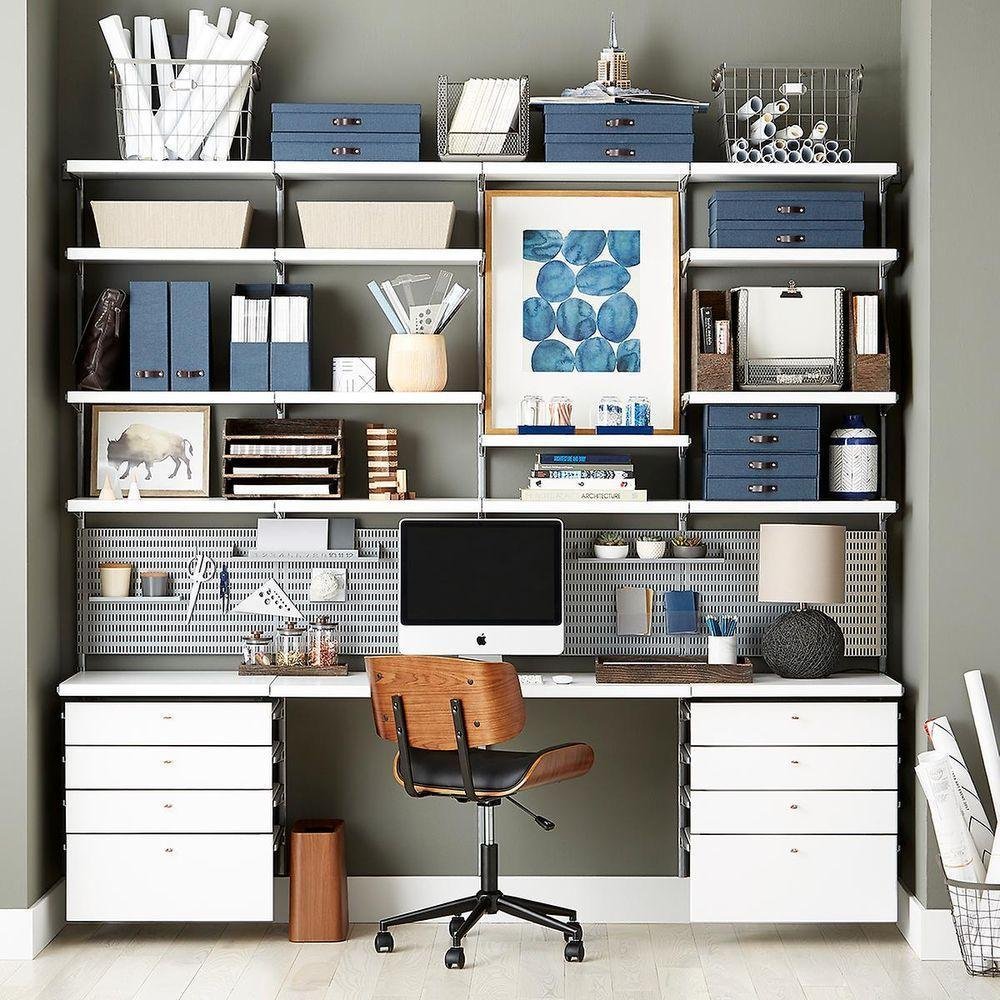
Use vertical storage to keep the desktop clear and maintain an organised appearance.
If you need to work from your bedroom, create a separate visual zone. A small desk, suitable chair and coordinated wall décor can help distinguish the work area from the sleeping area.
Whenever possible, keep work-related items organised so that the bedroom still feels relaxing after office hours.
A cluttered desk can make even a beautifully designed room look untidy. Proper storage helps keep essential items accessible while maintaining a clean appearance.

Consider these storage solutions:
Instead of adding another cabinet to the floor, use the wall above your desk.
Floating shelves can accommodate books, small plants, decorative objects and office supplies. Keep frequently used items within easy reach.
Open shelves are attractive, but too many visible objects can make the workspace look busy.
Use closed drawers and cabinets for files, chargers, cables and items you do not need every day.
Lighting is essential for a practical workspace. A poorly illuminated desk can create shadows and make computer work uncomfortable.
A balanced home office can use three types of lighting:
Ambient lighting: Provides general illumination through ceiling lights or other room fixtures.
Task lighting: Focuses light on your desk through a table lamp or adjustable desk light.
Accent lighting: Adds visual interest through shelf lighting, wall lights or concealed LED strips.
Place your desk lamp where it illuminates your work without producing distracting reflections on the screen.
For right-handed users, placing the lamp on the left can help reduce shadows from the writing hand. Left-handed users may prefer the opposite arrangement.
Warm or neutral lighting can work well depending on the room and personal preference. For detailed tasks, choose a light that provides sufficient brightness without glare.
Also make sure that your computer screen brightness is comfortable in relation to the surrounding room.
Colour plays an important role in the overall appearance of your workspace.
For a calm and organised environment, consider:
Beige, cream and light wood finishes can make a small workspace feel bright and visually spacious.

Sage green, muted olive and natural wood can create a relaxed atmosphere. These shades also work well with indoor plants.
If you want a more distinctive workspace, use a subtle wallpaper, textured finish or a contrasting paint shade behind the desk.
Avoid excessive patterns and overly distracting colours if you prefer a visually calm work environment.
Video meetings have become a regular part of professional life. A thoughtfully designed background can make your workspace look more polished.
Here are some simple ideas:
Try to keep the background organised and avoid placing too many decorative items behind your chair.
If possible, position your camera at approximately eye level and use soft front-facing light to make your face clearly visible during calls.

Every home has a different layout. Your workspace should be designed around the room’s actual dimensions and daily usage.
Use a compact desk against an unused wall or near a window. A small bookshelf or decorative partition can visually separate the workstation from the seating area.
Choose furniture that complements the living room rather than making the workspace look like a separate office installation.
A slim desk, comfortable chair and floating shelves can create a functional workstation without occupying too much space.
Choose colours and finishes that coordinate with the bedroom furniture. Closed storage can help conceal office accessories after working hours.
If you have an extra room, create a complete workstation with a spacious desk, ergonomic chair, bookshelves and storage cabinets.
You can also include a small reading corner with a comfortable chair and floor lamp.
In a duplex or independent house, the space beneath a staircase can sometimes be converted into a compact workstation.
Custom-sized furniture and suitable lighting can help make use of this otherwise unused area.
A workspace should be functional, but it should also feel pleasant and personal.
Indoor plants, framed artwork and a few decorative accessories can make the environment more inviting.
Some ideas include:
Do not overcrowd the desk. Keep the decoration limited to a few items that add character without reducing usable working space.
Visible wires can make even an expensive workstation look untidy.
Plan cable management before arranging your computer and other equipment.
Useful solutions include:
Keep cables organised and ensure that electrical connections are accessible and safely installed.
Avoid overloading extension boards. Consult a qualified electrician if you need additional electrical points.
For smaller Indian homes, furniture that serves multiple purposes can be particularly useful.
Consider these options:
Desk with storage: Combines a working surface with drawers for stationery and documents.
Foldable desk: Can be closed when not in use, freeing up floor space.
Storage bench: Provides seating and hidden storage in a suitable room layout.
Wall-mounted shelves: Offer storage without occupying floor area.
Convertible furniture: Allows a room to serve as a workspace during the day and a different functional area later.
Choose multifunctional furniture according to your actual routine rather than purchasing features you may rarely use.
A good-looking workspace may still be uncomfortable if important planning details are ignored.
Avoid these common mistakes:
Before purchasing furniture or starting renovation work, consider the following checklist:
A little planning can help you avoid unnecessary purchases and create a workstation that supports your everyday routine.
A home office should be more than a desk placed in an empty corner. It should be a comfortable, organised and visually appealing space that supports your working routine.
Whether you have a separate study room or a compact apartment, the right combination of ergonomic furniture, smart storage, suitable lighting and thoughtful décor can make a significant difference.

Start with the essentials, use available space intelligently and select finishes that complement your home.
With these home office design ideas for Indian homes, you can create a workspace that looks stylish, feels comfortable and makes working from home more convenient.
Explore Interior World for interior products and furnishing ideas, or contact our team to discuss your home interior requirements.
Use a wall-mounted or foldable desk, a compact ergonomic chair and vertical shelves. Select an unused corner or bedroom wall to create a dedicated workspace.
A suitable desk, comfortable ergonomic chair, task light and basic storage are the main essentials. Additional furniture depends on your work requirements.
A quiet location near natural light is a good starting point. Avoid direct sunlight and screen glare, and make sure the desk does not block normal movement.
Warm white, beige, soft grey, sage green and muted blue are popular choices. Select colours that complement your existing interiors and personal preferences.
Keep the desk organised, use coordinated furniture, add simple wall décor and create a clean video-call background with suitable lighting.
Use cable trays, wire sleeves, clips and organised charging stations. Plan electrical points before installing the furniture.
Yes. A compact desk, suitable chair and wall-mounted shelves can create a functional workstation. Use closed storage to keep office items out of sight when work is finished.
Leave A Comment