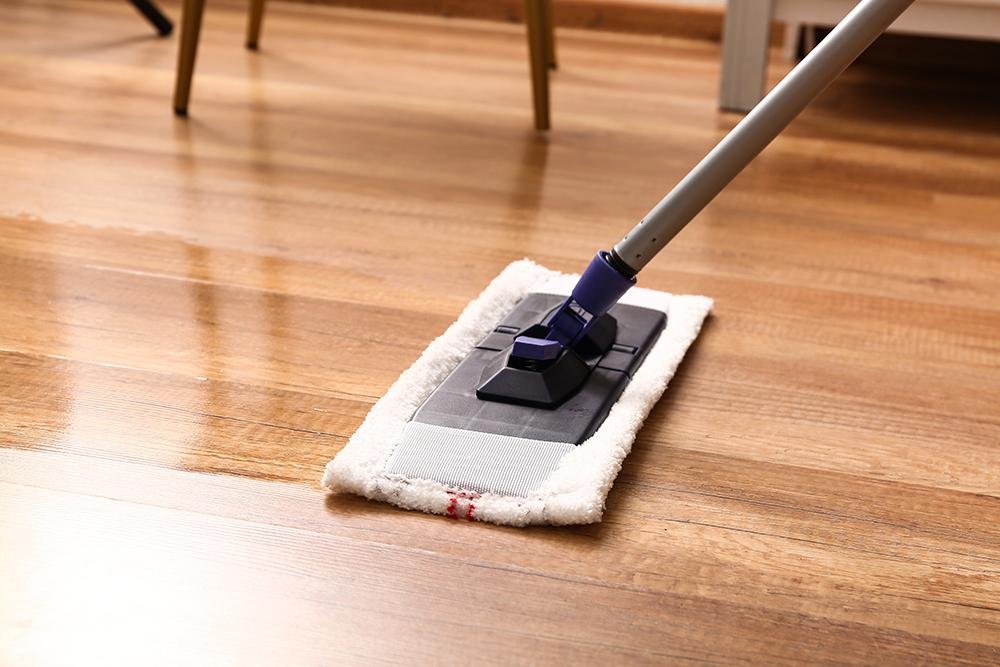
Wooden flooring has become a popular choice for homeowners who want to create a warm, elegant and comfortable living environment. Whether you are designing a modern apartment, renovating an existing house or planning a luxury villa, the right flooring can completely transform the appearance of your interiors.
Unlike traditional flooring options, wooden flooring adds natural warmth, texture and character to a space. It also works beautifully with different interior design styles, including contemporary, minimalist, Scandinavian and classic interiors.
However, choosing wooden flooring is not just about selecting an attractive colour or pattern. You also need to consider the material, durability, maintenance requirements, installation method and suitability for different rooms.
If you are planning to install wooden flooring in your home, this guide will help you understand the available options and make a more informed decision.

Flooring plays an important role in the overall appearance and functionality of an interior. Since it covers a large surface area, the right flooring can influence how spacious, comfortable and visually balanced a room feels.
Wooden flooring offers several advantages that make it suitable for different residential interiors.
One of the biggest advantages of wooden flooring is its natural-looking appearance. Wood-inspired textures and patterns create a welcoming atmosphere and complement a wide range of furniture styles.
Light wood shades can make smaller rooms feel more open, while darker shades can create a rich and sophisticated appearance.
Compared with many hard flooring surfaces, wooden and wood-look flooring can offer a more comfortable feel underfoot, depending on the product and underlay used.
This makes it an appealing option for bedrooms, living rooms and private spaces where everyday comfort matters.
Wooden flooring is available in different shades, finishes, textures and plank sizes.
You can choose from:
These options make it easier to coordinate flooring with wall colours, curtains, furniture and other decorative elements.
Wooden flooring works well with both modern and traditional furniture. Whether your home has neutral sofas, wooden furniture, metal accents or colourful furnishings, you can find a flooring shade that complements the overall design.
Before selecting a product, it is important to understand that not all wooden flooring materials are the same. Different flooring types have different construction methods, performance characteristics and maintenance requirements.

Solid hardwood flooring is manufactured from natural wood throughout its thickness.
It offers an authentic wood appearance, with natural grain patterns and variations that make every installation distinctive.
Key features:
Solid hardwood is generally more sensitive to changes in moisture and temperature than some engineered alternatives. It may not be suitable for every Indian home or installation environment.
Engineered wood flooring consists of a real wood top layer bonded to multiple supporting layers.
Its construction is designed to provide better dimensional stability than traditional solid wood flooring under changing environmental conditions.
Key features:
It is a good option for homeowners who prefer the appearance of real wood but want a different construction approach from solid hardwood.
Laminate flooring is a manufactured flooring product designed to reproduce the appearance of natural wood.
It generally consists of a decorative surface layer, a core board and a protective wear layer.
Key features:
It is important to remember that laminate flooring is not solid wood. Its moisture resistance depends on the product specification and construction.
SPC stands for Stone Plastic Composite. This flooring uses a rigid composite core and can feature realistic wood-inspired surface designs.
It is another option for homeowners who want the appearance of wooden flooring with a different material construction.
Key features:
Always check the manufacturer’s specifications for water resistance, installation requirements and warranty coverage.
One flooring type does not necessarily work equally well in every room. Each space has different requirements based on foot traffic, moisture exposure, furniture usage and cleaning frequency.

The living room is one of the most frequently used areas of a home. It is where families relax, entertain guests and spend time together.
For this space, choose a flooring option that balances appearance, durability and everyday maintenance.
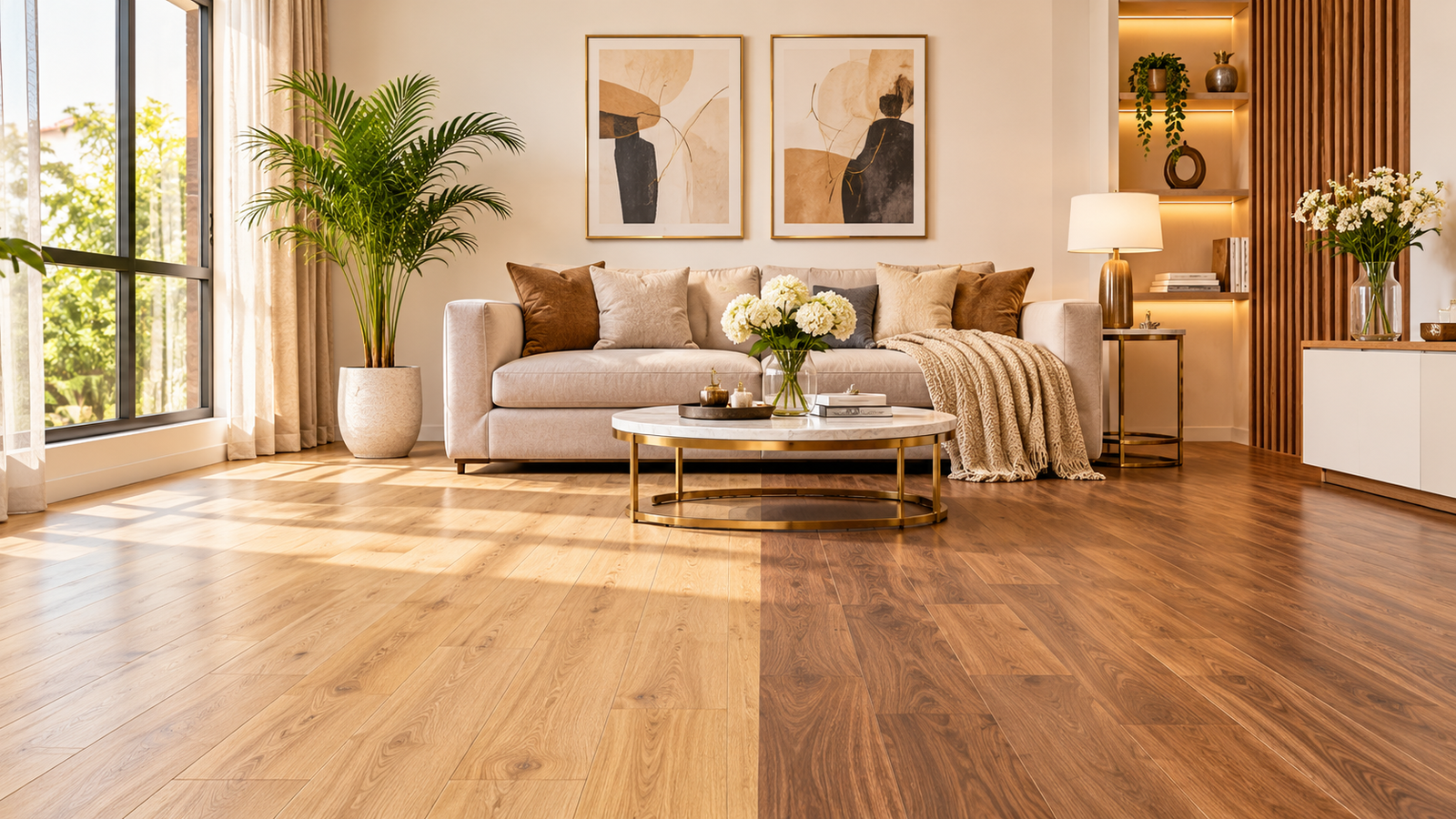
Natural oak-inspired, walnut-inspired and medium-brown finishes can complement modern living room interiors.
Consider the furniture colour, carpet placement and natural lighting before selecting the final shade.
Bedrooms are private spaces where comfort and a relaxing atmosphere are important.
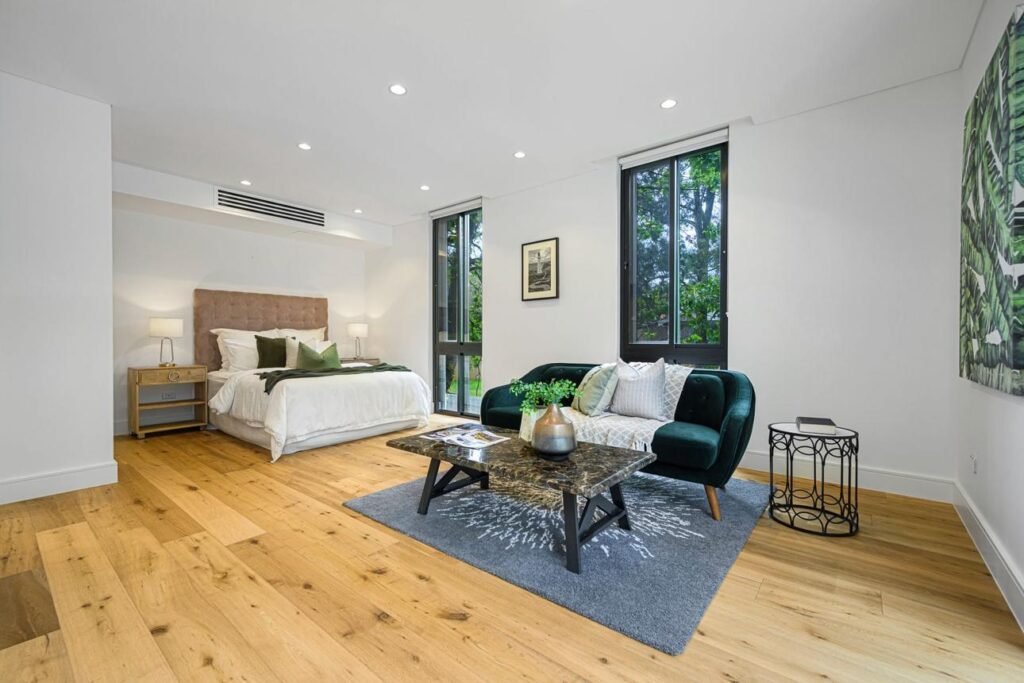
Light oak, natural beige and warm brown finishes can create a peaceful appearance.
You can also coordinate the flooring with upholstered beds, wardrobes, bedside tables and soft furnishings to achieve a balanced interior.
Dining spaces experience regular furniture movement and food spills.
Choose a flooring product with a suitable wear layer and clearly specified cleaning requirements. Protective pads under dining chairs can also help minimise scratches.
A home office should look professional while remaining comfortable for long working hours.
Wooden flooring can create a clean and organised appearance. Before choosing a product, consider chair movement, furniture weight and the need for floor protection.
This depends entirely on the product.
Traditional solid wood and many standard laminate products are not ideal for areas with frequent water exposure.
Some specially designed water-resistant laminates and SPC products may be suitable for certain applications, provided the manufacturer permits their use and the installation is done correctly.
For bathrooms and wet areas, always prioritise flooring specifically rated for that environment.
Flooring colour can significantly influence the visual appearance of your interiors.
The right shade should complement your walls, furniture, lighting and overall design theme.

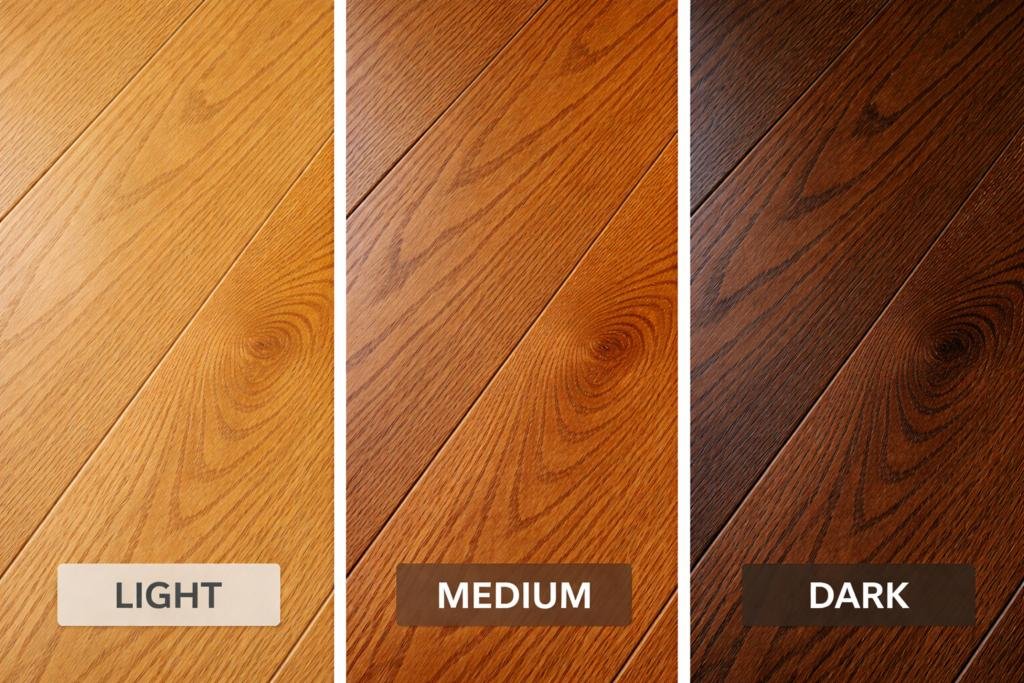
Light shades such as natural oak, beige and pale wood finishes can make a space appear brighter and more open.
They work particularly well with:
Medium brown shades provide a balanced appearance without making the space feel too dark.
They complement neutral furniture, earthy wall colours and contemporary interior designs.
Dark shades such as walnut and deep brown create a rich and luxurious atmosphere.
They can look particularly attractive in larger living rooms, premium bedrooms and classic interiors.
However, darker surfaces may make dust and light-coloured scratches more noticeable, depending on their finish.
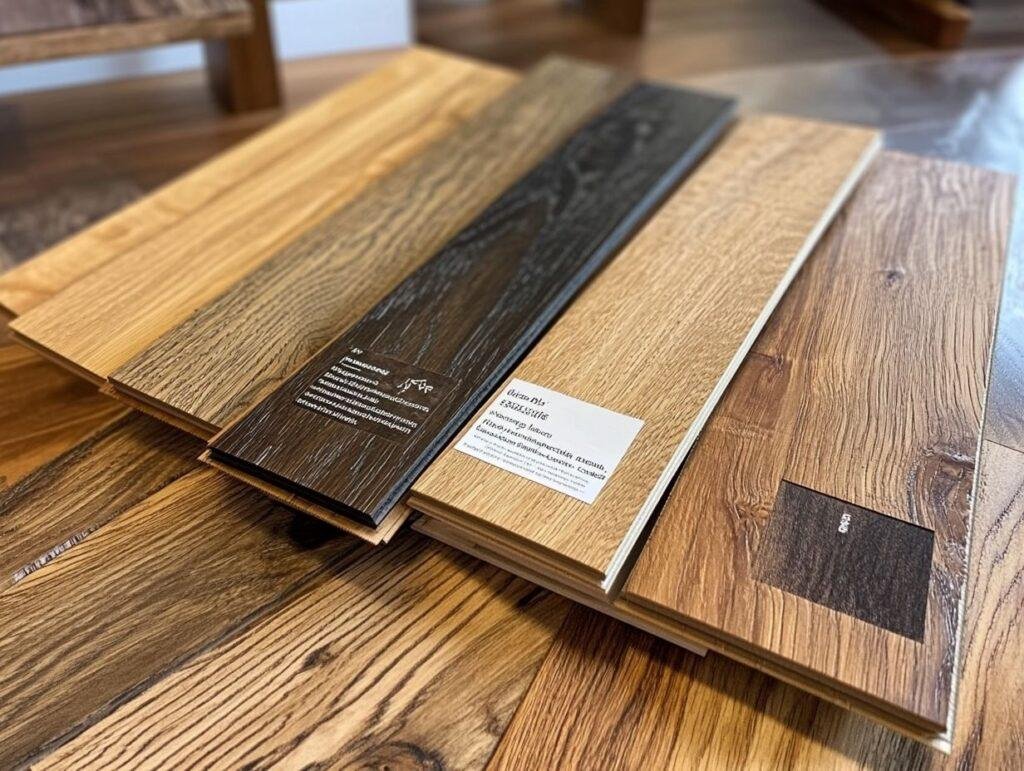
Expert tip: Always view a physical flooring sample in your actual room lighting before making the final selection. Colours can look different under daylight and artificial lighting.
Choosing flooring only by appearance can lead to problems later. Before purchasing, evaluate the following factors.
Consider how frequently the room will be used.
For high-traffic areas, look for suitable wear ratings, surface protection and product specifications. Laminate products may have AC ratings, while other flooring types use different performance classifications.
Do not compare products only by thickness or appearance.
Moisture is an important consideration when selecting flooring.
Check whether the product is water-resistant, waterproof or simply suitable for dry interior applications. These terms are not interchangeable.
Also consider the moisture condition of the subfloor before installation.
Different flooring products require different installation methods.
Some use click-lock floating systems, while others may require adhesive or specific subfloor preparation.
Professional installation helps ensure correct expansion gaps, alignment and finishing.
Always ask about:
A clear understanding of these details can help you avoid unexpected maintenance and replacement costs.
Proper maintenance can help preserve the appearance and performance of your flooring.
Although different products have different cleaning requirements, a few everyday practices are useful.
Dust, sand and small particles can cause surface scratches when repeatedly walked over.
Use a soft broom, dry microfiber mop or vacuum cleaner with an appropriate hard-floor attachment.
Do not flood the floor while cleaning.
For laminate and natural wood products, excessive moisture can damage the surface or internal construction. Follow the manufacturer’s recommended cleaning procedure.
Place suitable protective pads under chairs, tables and heavy furniture.
This can help minimise scratches caused by regular movement.
Wipe spills promptly using a suitable cleaning cloth.
Even when a product offers water resistance, leaving liquid on the surface for long periods is not recommended unless the manufacturer specifically permits it.
Strong chemicals and abrasive cleaning materials can damage protective finishes.
Use cleaning products recommended for your particular flooring type.

Jaipur homeowners should consider local environmental conditions before selecting any flooring material.
The city experiences hot summers, seasonal monsoon conditions and variations in indoor humidity.
These changes can affect flooring materials differently.
For natural solid wood and engineered wood, moisture levels and installation conditions are particularly important. Allowing the material to acclimatise according to the manufacturer’s instructions before installation can help reduce the risk of movement after fitting.
For laminate and SPC products, check the specified installation temperature, subfloor requirements and expansion provisions.
Here are a few practical recommendations:
A proper site assessment can help you choose a flooring solution that suits your home and everyday requirements.
Both wooden flooring and tiles can work beautifully in residential interiors. The right choice depends on your design preferences and practical requirements.
| Comparison | Wooden / Wood-look Flooring | Traditional Tiles |
|---|---|---|
| Appearance | Warm and natural wood-inspired look | Wide range of stone and ceramic designs |
| Comfort | Can feel softer and warmer underfoot | Generally harder and cooler |
| Design | Suitable for cosy and contemporary interiors | Suitable for almost every interior style |
| Maintenance | Depends on flooring material | Generally easy to clean |
| Moisture suitability | Product-specific | Many options suit wet areas |
| Installation | Product-specific fitting requirements | Requires tile installation and grouting |
If you prefer a warm, natural and elegant appearance, wooden flooring can be an excellent choice for bedrooms and living areas.
If your priority is frequent water exposure or a particular maintenance requirement, suitable tiles may be more practical.
Before finalising your flooring, avoid these common mistakes:
1. Choosing only by colour: A beautiful finish does not automatically mean the flooring is suitable for your room.
2. Ignoring moisture conditions: Always check the suitability of the product for the installation environment.
3. Not checking samples: Online images may not accurately represent the actual colour and texture.
4. Overlooking maintenance: Different flooring materials require different cleaning methods.
5. Ignoring installation quality: Poor subfloor preparation or incorrect fitting can affect the flooring’s long-term performance.
6. Not checking the warranty: Understand what the warranty covers and what conditions may invalidate it.
Selecting the right flooring is an important part of creating a beautiful and functional home.
From natural wood-inspired finishes to modern laminate and SPC options, there are several choices available to suit different interior styles and practical requirements.
At Interior World, you can explore interior solutions and flooring options to complement your residential space.
Whether you are renovating your bedroom, designing a new living room or planning a complete home interior, choosing the right material and finish can make a meaningful difference.
Visit Interior World to explore interior solutions, or contact our team to discuss your requirements.
The best option depends on your budget, room usage and maintenance preferences. Engineered wood, laminate and SPC flooring each offer different advantages. Compare product specifications before selecting one.
Yes, suitable wooden and wood-look flooring products can be used in Indian homes. However, temperature, humidity, moisture exposure and installation conditions should be considered before choosing the material.
Its lifespan depends on the material, product quality, installation, usage and maintenance. Solid hardwood may be refinished, while laminate and SPC flooring generally have different repair and replacement requirements.
No. Laminate flooring is a manufactured product with a decorative layer designed to reproduce the appearance of wood. It is different from solid and engineered wood flooring.
Yes. Bedrooms are among the most suitable spaces for many wooden and wood-look flooring options because they generally experience less moisture exposure than kitchens and bathrooms.
Use a soft broom, microfiber mop or suitable vacuum attachment. Avoid excessive water and harsh chemicals, and follow the cleaning instructions provided by the manufacturer.
Professional installation is recommended for most flooring products. Proper subfloor preparation, expansion gaps, alignment and finishing can improve the overall installation quality.
Wooden flooring is more than just a decorative surface. It contributes to the comfort, appearance and overall character of your home.
By understanding different flooring materials, selecting appropriate colours and considering room-specific requirements, you can make a better long-term decision.
Take time to compare samples, check product specifications and choose an installation solution that suits your lifestyle.
A thoughtfully selected floor can become one of the most attractive features of your interior for years to come.
Leave A Comment