A comfortable bedroom is about more than attractive furniture, beautiful curtains and stylish décor. The mattress you sleep on every night also plays an important role in making your bedroom feel comfortable and inviting.
Choosing a mattress can be confusing because there are many options available, including foam, memory foam, spring, latex and coir mattresses. Each type has different characteristics, materials and comfort levels. The right choice depends on your sleeping habits, preferred firmness, room conditions, bed size and budget.
A mattress that feels comfortable in a showroom may not necessarily suit everyone in the family. That is why it is important to understand the differences before making a purchase.
In this guide, we explain how to choose the right mattress for your bedroom, compare popular mattress types, discuss mattress sizes and share practical tips for selecting and maintaining one for Indian homes.
A mattress is one of the most frequently used items in a home. It should provide a comfortable surface and suit the way you sleep.
An unsuitable mattress may feel too hard, too soft or uncomfortable for your preferred sleeping position. A suitable mattress should balance cushioning and support according to your personal comfort requirements.
Before selecting one, consider:
Remember that there is no single mattress that is perfect for everyone. Personal comfort should be an important part of the selection process.
Understanding mattress materials is the first step towards making a suitable choice. The following types are commonly available in the Indian market.
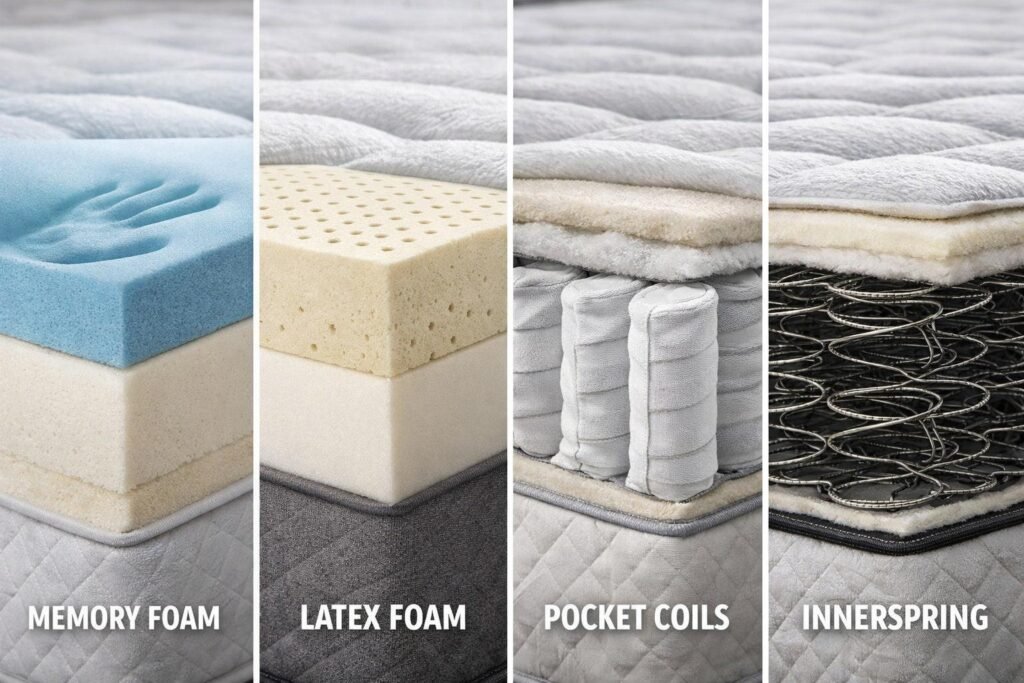
Foam mattresses are made using different types of polyurethane foam. They are available in a variety of thicknesses and firmness levels.
Key features:
When selecting a foam mattress, check the foam type, density, construction and product specifications rather than judging it only by how soft it feels.

Memory foam is designed to respond to body weight and pressure, creating a closer, contouring feel.
Key features:
Some memory foam mattresses may retain more warmth than other materials. If you tend to sleep hot, check the product’s ventilation and temperature-related specifications before buying.
Spring mattresses use metal coils as part of their support structure. They are available in different constructions, including Bonnell spring and pocket spring designs.
Key features:
Pocket springs are individually wrapped, while Bonnell springs are interconnected. Their movement, feel and motion transfer can differ.
Latex mattresses use natural latex, synthetic latex or a combination, depending on the product.
Key features:
Check whether the mattress uses natural or synthetic latex and review the product’s composition before purchase.
Coir mattresses use coconut fibre as part of their construction. They are traditionally popular in Indian households.
Key features:
The comfort and durability of a coir mattress depend on its construction and quality.
Hybrid mattresses combine two or more support and comfort materials, such as springs with foam or latex layers.
Key features:
Always check the actual layer construction because the term hybrid can describe different mattress designs.
Here is a simple comparison to help you understand the common differences.
| Mattress type | General feel | Key characteristic |
|---|---|---|
| Foam | Varies from soft to firm | Versatile and widely available |
| Memory foam | Contouring and cushioned | Adapts closely to body shape |
| Spring | Responsive and bouncy | Coil-based support |
| Latex | Responsive and springy | Latex-based comfort |
| Coir | Generally firm | Coconut fibre construction |
| Hybrid | Depends on layers | Combines multiple materials |
These are general characteristics, not guarantees. The final feel depends on the mattress model, construction, materials and firmness.
Firmness describes how soft or hard a mattress feels when you lie on it.
Common categories include:
A soft mattress provides a more cushioned surface. It may appeal to people who prefer a plush feel, but the amount of support depends on its construction and suitability for the sleeper.
A medium mattress offers a balance between cushioning and firmness. It is worth considering if you are unsure about your preferred comfort level.
A medium-firm mattress feels more supportive while retaining some cushioning. It is a commonly considered option for people who want a balanced surface.
A firm mattress has less cushioning and a more solid feel. It may suit people who specifically prefer a firm sleeping surface.
Important: Do not assume that the hardest mattress is always the best. Comfort is individual, and mattress firmness labels can vary between manufacturers. Try the mattress whenever possible.
Your preferred sleeping position can help narrow down the options.
People who sleep on their sides may prefer a mattress with enough cushioning around the shoulders and hips.
A mattress that feels excessively hard may create uncomfortable pressure, while one that is too soft may not feel supportive enough.
Back sleepers may prefer a mattress that feels balanced and supports their body comfortably without excessive sinking.
People who sleep on their stomachs may prefer a firmer surface that limits excessive sinking around the midsection.
If you frequently change sleeping positions, consider a responsive mattress that makes movement comfortable.
These are general shopping considerations, not medical recommendations. If you have persistent pain or a medical condition, discuss mattress selection with an appropriate healthcare professional.
Choosing the correct mattress size is just as important as selecting the material.
A mattress should fit the bed frame properly without leaving large gaps or being forced into a smaller frame.
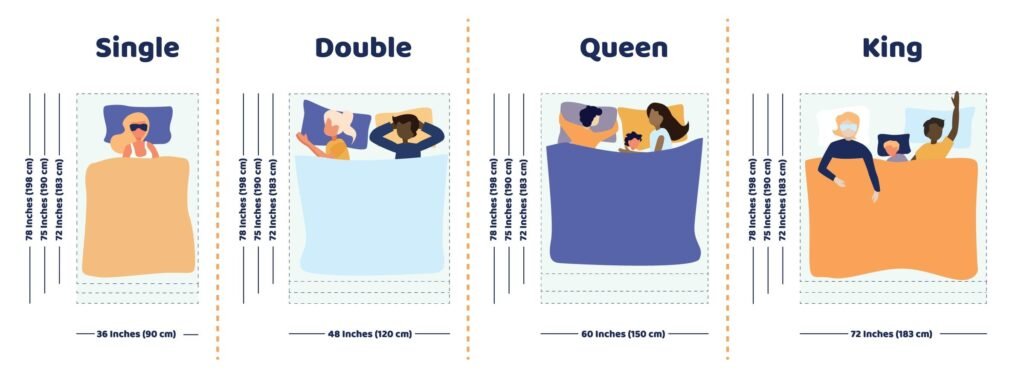
Common size categories include:
A single mattress is suitable for one person and is commonly used in children’s rooms, guest rooms and compact bedrooms.
A double mattress provides more width than a single mattress and can be suitable for compact sleeping arrangements.
A queen mattress is a popular option for couples and medium-sized bedrooms.
A king mattress offers more sleeping space and is useful when the bedroom can accommodate a larger bed frame.
Before ordering: Measure the inside dimensions of your bed frame. Mattress dimensions can vary between manufacturers, so never rely only on the size name.
Mattress thickness can influence the overall feel, but a thicker mattress is not automatically better.
The required thickness depends on the mattress construction, support layers, sleeper requirements and bed-frame design.

Consider these points:
A well-constructed mattress of suitable thickness may be a better choice than a thicker product with unclear material specifications.
Room temperature and ventilation can influence how a mattress feels.
Indian homes experience different weather conditions, including hot summers, humid monsoons and cooler winters.
Here are some points to consider:
For Hot Rooms: Look for products with suitable breathable construction and check the manufacturer’s temperature-related claims.
For Humid Conditions: Maintain bedroom ventilation and keep the mattress dry. Check the care instructions for moisture management.
For Air-Conditioned Bedrooms: You may have more flexibility when selecting different foam and comfort-layer options.
For Seasonal Use: Consider whether the mattress material and construction suit the room throughout the year, not only during one season.
No mattress should be assumed to be completely moisture-proof or temperature-regulating without checking its specifications.

Different bedrooms have different requirements.
When two people share a bed, consider:
Pocket spring and memory foam constructions may offer different motion-isolation characteristics. Test the mattress together if possible.
A guest-room mattress should be comfortable, practical and suitable for occasional use.
Consider a versatile comfort level, suitable dimensions and easy maintenance. You may not need the same premium features required for a primary bedroom.
For children’s rooms, select a mattress with appropriate dimensions, suitable support and materials that are easy to maintain.
Follow the manufacturer’s age and usage recommendations.
Before finalising your purchase, review the following details.
Material Composition: Understand whether the mattress uses foam, memory foam, springs, latex, coir or a combination.
Firmness: Check the manufacturer’s firmness description and test the mattress if possible.
Dimensions: Match the mattress to the exact bed-frame measurements.
Weight Capacity: Confirm that the product is suitable for the intended users.
Warranty: Read the coverage period, exclusions and conditions carefully.
Trial and Return Policy: Check whether a trial period is available, how returns work and whether additional charges apply.
Maintenance: Understand whether the mattress needs rotation, a protector or specific cleaning methods.
Product Certification: Review any material, safety or quality certifications claimed by the manufacturer and verify their relevance.
Do not make a decision based only on discounts or words such as premium, luxury or orthopedic. Compare the actual product specifications.
A mattress can remain in better condition when it is maintained according to the manufacturer’s instructions.
Follow these simple practices:
Good maintenance helps protect the mattress, although it cannot guarantee a specific lifespan.
Avoid these common mistakes when purchasing a new mattress:
A little research before buying can help you avoid an unsuitable purchase.

A comfortable bedroom is created through the right combination of furniture, bedding, lighting, flooring and other interior elements.
Along with selecting a suitable mattress, consider how the bed, curtains, rugs and wall finishes work together to create a coordinated space.
Interior World offers a range of interior products for residential spaces. Explore the Interior World website to discover its product range and interior solutions.
For enquiries about products and your interior requirements, visit the Contact Us page.
The best mattress depends on your preferred firmness, sleeping position, comfort requirements, room conditions and budget. Compare the material and construction before making a choice.
Foam mattresses offer different cushioning and firmness options, while spring mattresses generally provide a more responsive, bouncy feel. The right option depends on personal preference and construction quality.
Memory foam can be a suitable option for some sleepers, but it may retain more warmth than certain other constructions. Check ventilation and product specifications, particularly for rooms that become hot.
Latex mattresses use latex-based materials and generally have a responsive, springy feel. Coir mattresses use coconut fibre and are generally firmer. Their comfort and durability depend on construction and quality.
Measure the inside dimensions of your bed frame and compare them with the manufacturer’s actual mattress dimensions. Do not rely only on names such as queen or king.
No. Firmness is a personal comfort preference. A mattress should provide a suitable balance of cushioning and support for the person using it.
Use a mattress protector, keep the mattress dry, follow the manufacturer’s cleaning instructions and rotate it only when recommended.
Final Thought: Choosing a mattress is an important part of creating a comfortable bedroom. Understand the available materials, compare firmness levels, measure your bed correctly and review the product specifications before purchasing. The right mattress is the one that suits your comfort preferences and everyday requirements.
Leave A Comment