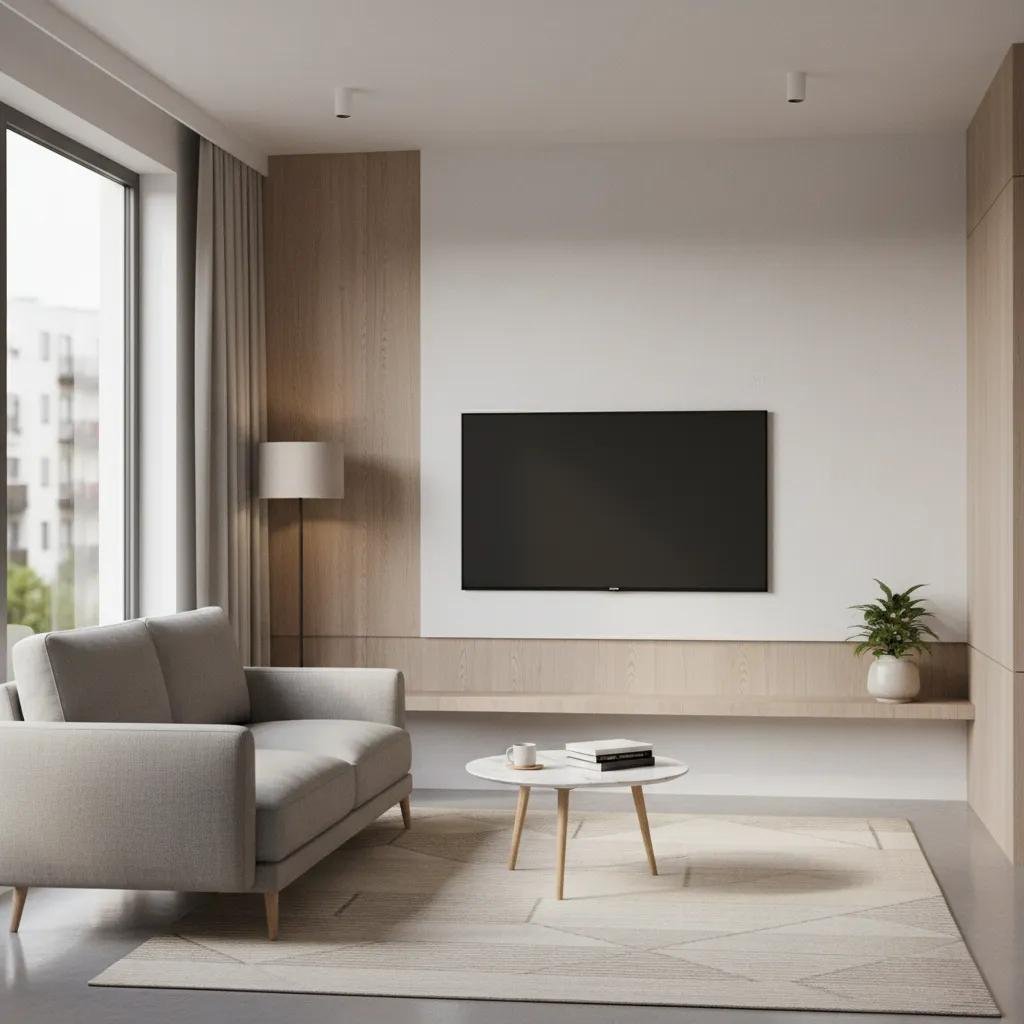
The living room is one of the most important spaces in an Indian home. It is where families relax, watch television, entertain guests and spend time together. Among all the furniture and decorative elements, the TV unit often becomes the visual centre of the room.
A modern TV unit is no longer just a cabinet for placing a television. It combines storage, wall decoration, lighting, cable management and interior styling into one functional feature.
Whether you live in a compact apartment or a spacious independent house, the right TV unit can improve the appearance and functionality of your living room.
From minimal floating cabinets and warm wooden panels to luxurious marble-effect backdrops and full-wall entertainment units, there are several ways to design this important space.
In this guide, we will explore modern TV unit design ideas for Indian homes, including popular styles, materials, lighting, storage solutions and practical tips for choosing the right design.
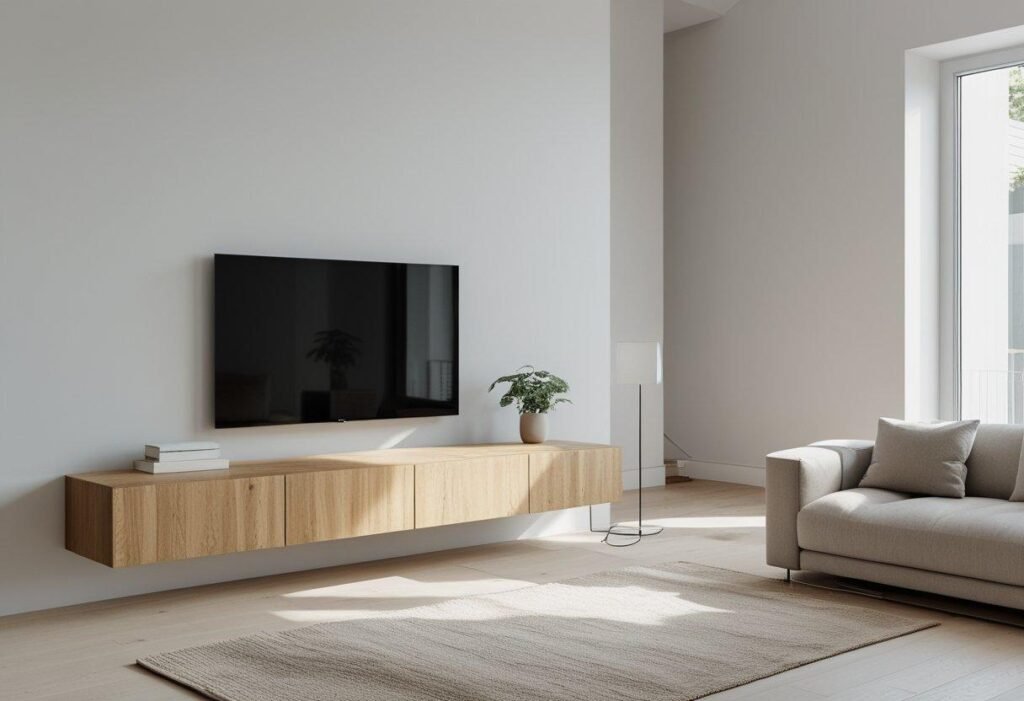
Floating TV units are among the most practical choices for contemporary homes. Unlike traditional floor-standing cabinets, these units are fixed to the wall, leaving visible floor space underneath.
This creates a lighter and cleaner appearance, particularly in smaller living rooms.

Wooden floating cabinet: A warm wooden finish creates a timeless appearance and complements neutral living room interiors.
White floating cabinet: Ideal for minimalist spaces with light-coloured walls and contemporary furniture.
Two-tone floating unit: Combines wood with white, beige, grey or charcoal finishes for a modern look.
Minimal floating shelf: Suitable for homes that need only basic storage and a simple TV arrangement.
Before installation, check the wall construction and use suitable structural supports and anchors. A floating cabinet carrying heavy equipment must be securely fixed by a professional.
Wood remains one of the most versatile materials for interior design. It brings warmth and natural texture to a living room while working well with different furniture styles.
A wooden TV unit can be designed in several ways depending on the room’s size and overall décor.

Natural oak, walnut and teak-inspired finishes create a warm and sophisticated atmosphere.
These finishes pair well with beige sofas, neutral walls, wooden flooring and indoor plants.
Dark walnut and deep wood finishes can create a rich appearance, especially when combined with lighter wall colours.
Use suitable lighting so that the TV wall does not appear too dark.
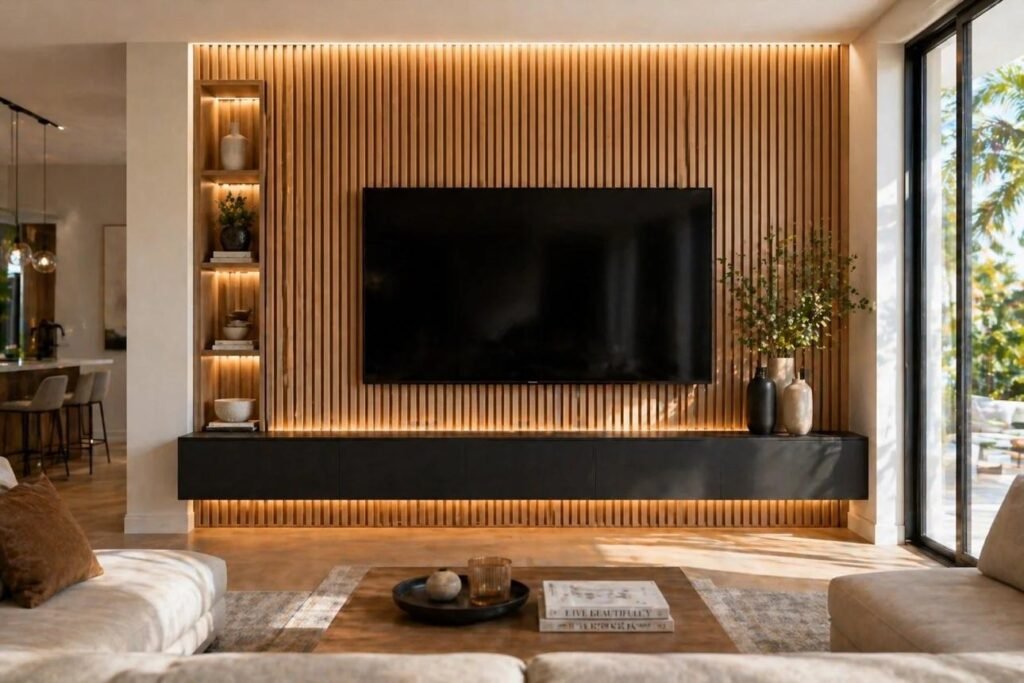
Vertical wooden slats add texture and visual height to the TV wall.
They can be used behind the television, alongside a floating cabinet or as a partial feature wall.
Design tip: Use one dominant wooden finish and coordinate it with the other furniture in the room. Too many competing wood shades can make the interior look inconsistent.
If you want your living room to have a premium appearance, a marble-effect or stone-finish TV backdrop is worth considering.
These surfaces create a distinctive feature behind the television and work particularly well with contemporary interiors.
Popular options include:
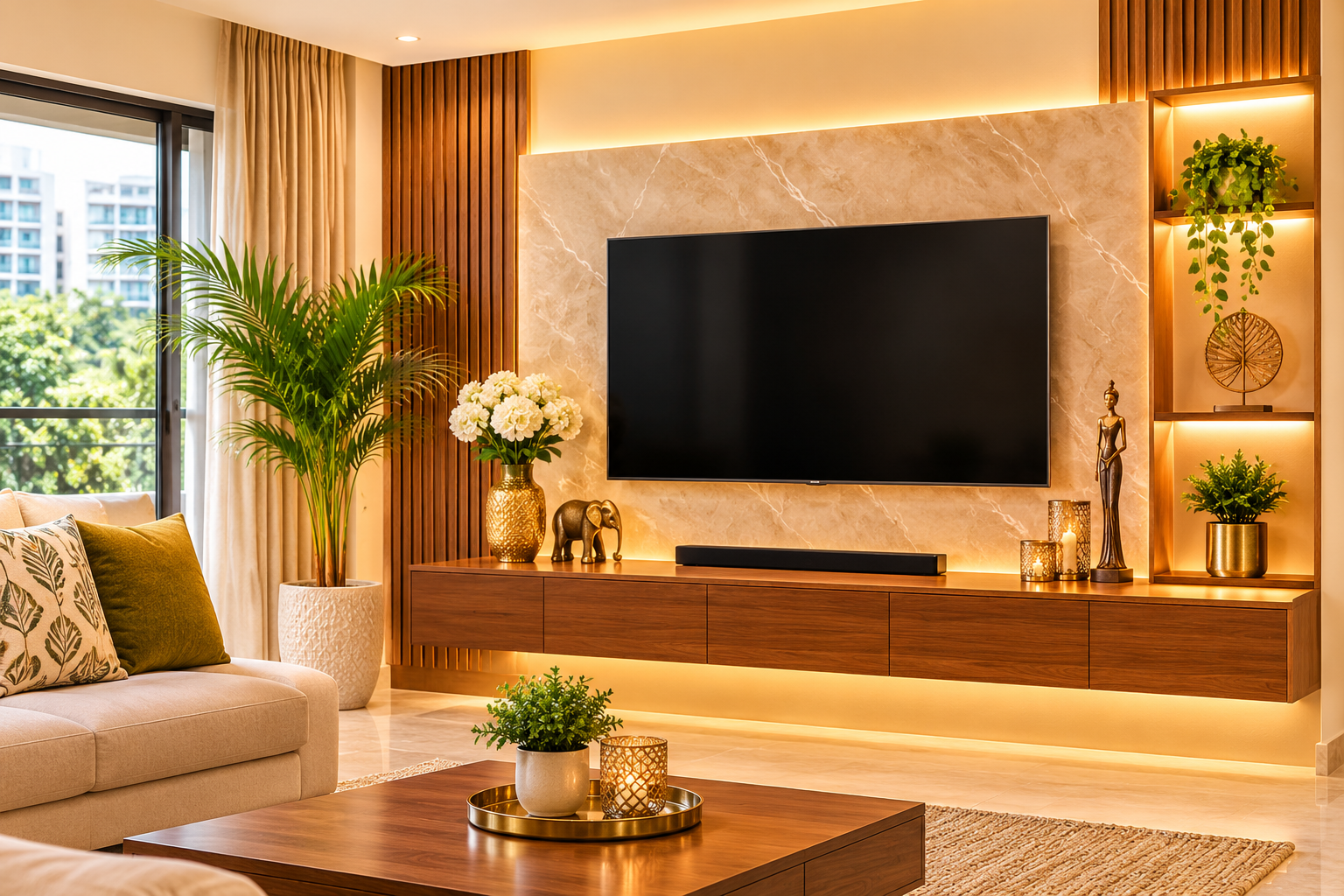
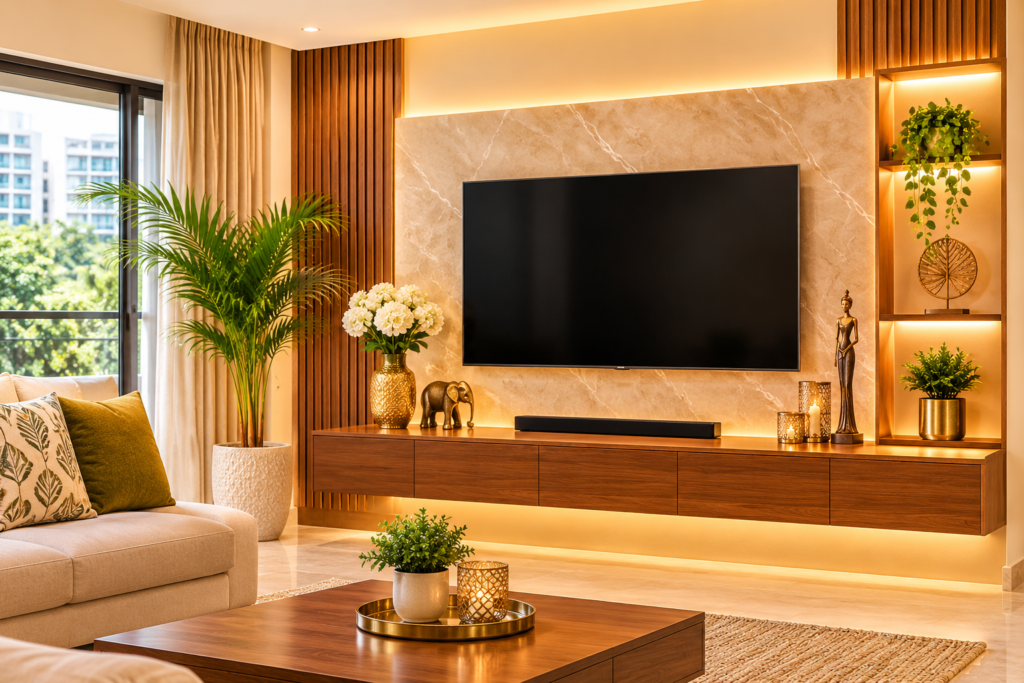
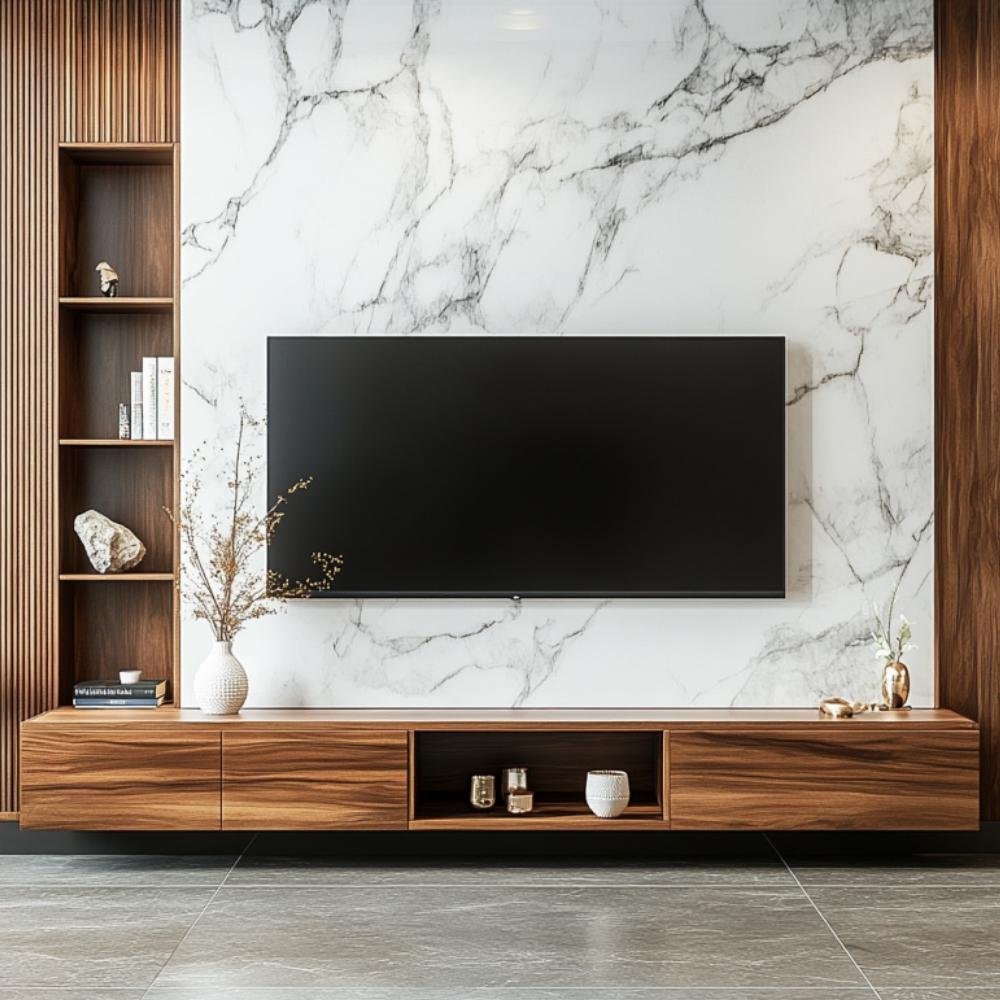
Combine a light marble-effect panel with a wooden floating console and warm concealed lighting.
For a more dramatic appearance, use a darker stone-effect backdrop with subtle metallic accents.
You do not necessarily need natural marble. Depending on the design and installation requirements, decorative laminates, porcelain surfaces or other suitable panel materials can provide a similar visual effect.
Choose materials based on durability, maintenance and the wall’s installation requirements.
Fluted panels are a popular way to add texture and depth to a contemporary TV wall.
Their vertical grooves create a structured appearance without requiring too many decorative elements.
Full-height fluted wall: Covers the entire TV wall and creates a strong visual statement.
Partial fluted backdrop: Uses panels only behind or beside the television.
Wooden fluted panels: Add natural warmth and work well with wooden furniture.
Dark fluted panels: Create a bold contemporary appearance when balanced with suitable lighting.
The panel colour should complement the flooring, sofa and other furniture.
Avoid using too many textures on the same wall. A fluted panel, stone-effect surface and elaborate wallpaper together may make the TV area visually crowded.
Choose one main feature and keep the remaining elements simple.
Small apartments need furniture that provides functionality without occupying unnecessary space.
A bulky entertainment cabinet can make a compact living room feel crowded.
Instead, choose a simple TV unit with limited storage and a clean design.

In smaller homes, the TV unit should be proportionate to the available wall width.
A compact floating console with two or three drawers may provide enough storage for remote controls, accessories and small devices.
If additional storage is required, consider a narrow vertical cabinet instead of extending the entire unit across the wall.
If your living room has a large feature wall, a full-wall entertainment unit can create a strong architectural focal point.

These designs combine multiple elements such as:
Create open niches on one or both sides of the television.
Use them to display selected decorative objects, books, photographs and indoor plants.
If storage is a priority, use larger closed cabinets for household accessories, documents and electronic equipment.
Keep the TV section visually simple so that the complete wall does not look overloaded.
Important: Full-wall designs work best when the wall dimensions, ceiling height and storage requirements are planned together.
A practical TV unit should offer a balance between display space and concealed storage.
Open shelves make decorative objects visible, while closed cabinets help hide everyday clutter.
Suitable for:
Suitable for:
A combination of both creates a functional unit without making the wall look like a large storage cabinet.
Leave sufficient ventilation around electronic devices stored inside cabinets. Equipment such as gaming consoles, routers and media players can generate heat.
Lighting can significantly improve the appearance of a TV unit, particularly during the evening.
Concealed lighting adds depth to the backdrop and highlights selected design elements.
Popular lighting options include:
Backlit TV panels: LED strips placed behind the panel create a soft glow around the television.
Under-cabinet lighting: Lighting below a floating console creates a subtle floating appearance.
Display shelf lighting: Small LED fixtures highlight decorative objects and books.
Cove lighting: Concealed lighting along the upper edge of a feature wall creates a gentle ambient effect.
Warm white lighting generally complements wooden finishes, beige walls and neutral interiors.
Neutral white can work well in contemporary spaces with cooler finishes.
Avoid excessive brightness or lighting that reflects directly on the television screen.
Wallpaper can be an effective way to decorate a TV wall without using extensive wooden panelling or heavy cabinetry.
Depending on your living room style, you can select:
Choose a design that complements the screen and surrounding furniture.
Large, busy patterns can compete visually with the television, so understated textures and balanced patterns are often more practical.
Wallpaper can also be combined with a floating wooden console for a simple, elegant arrangement.
Explore Interior World’s Wallpaper Collection for more wall décor inspiration.
Not every living room has a large, straight wall available for television placement.
A corner TV unit can make use of an otherwise difficult area.
This design may be suitable for:
A corner arrangement can include a suitable wall-mounted TV bracket, compact console and limited shelving.
However, ensure that the television can be viewed comfortably from the main seating area. Avoid placing the screen at an awkward angle simply to save space.
In open-plan homes, the living and dining areas may share one large space.
A carefully designed TV unit can sometimes work as a partial partition between these areas.
Some possible designs include:
This arrangement can create separate functional zones without completely closing the room.
Make sure the unit does not block natural light or interfere with circulation between the two areas.
The material should match your design preferences, maintenance expectations and available budget.
A practical option for customised TV cabinets.
Different laminate finishes are available, including wood, matte, stone and solid colours.
MDF can be used for decorative surfaces and certain cabinet applications when specified appropriately.
Select suitable grades and finishes for the intended use.
Natural wood veneer provides a premium wood appearance with distinctive grain patterns.
It requires appropriate finishing and care.
Glass can be used in selected display sections or decorative elements.
However, consider cleaning requirements, safety and the type of glass used.
Metal trims and handles can introduce a contemporary detail when combined with wood, laminate or stone-look surfaces.
The best material is not necessarily the most expensive one. It is the material that suits your design, usage and maintenance requirements.
Before finalising a TV unit, measure the wall and television carefully.
There is no single size that suits every living room. The correct dimensions depend on the TV screen, viewing distance, furniture arrangement and available wall space.
Consider these planning points:
TV height: Position the screen so that the centre is approximately at seated eye level for the main viewing position. The final height should account for sofa height and screen size.
Console width: The console should look proportionate to the television and the wall. It can be slightly wider than the screen, depending on the design.
Console depth: Make sure there is enough space for the devices you intend to store.
Viewing distance: Follow the television manufacturer’s recommendations for screen size and viewing distance.
Wall support: Confirm that the wall and mounting system can safely support the television and cabinet.
Cable access: Plan the power points, HDMI connections, internet connection and cable routes before the panel is installed.
Visible cables can spoil the appearance of even an expensive TV unit.
Plan cable management before beginning the carpentry or wall-panel installation.
Useful solutions include:
If you are installing a wall-mounted TV, decide where the power socket and connection points will be located.
Do not conceal electrical connections in a way that makes inspection or servicing difficult. Follow applicable electrical safety requirements and use a qualified electrician.
A TV unit should be attractive as well as practical. Avoid these common mistakes when planning your living room.
1. Choosing an oversized unit: A large cabinet can overwhelm a compact room.
2. Mounting the TV too high: Always consider the seated viewing position.
3. Ignoring cable management: Plan concealed routes before installation.
4. Using too many materials: Combining too many textures and finishes can make the wall look cluttered.
5. Adding excessive open shelves: Display shelves need regular organisation and cleaning.
6. Ignoring device ventilation: Electronic equipment requires adequate airflow.
7. Using excessive LED lighting: Too much decorative lighting can become distracting.
8. Not checking wall strength: Floating cabinets and TV brackets need suitable structural support.
9. Ignoring maintenance: Select finishes that are practical to clean and maintain.
Before finalising your design, ask yourself a few important questions:
If you have a compact living room, a floating console with a simple backdrop is often a practical starting point.
For a spacious living room, a full-wall design with a combination of closed storage and display niches may be more suitable.
A TV unit can become much more than a place to mount your television. It can organise your entertainment equipment, provide valuable storage and add character to your living room.
Whether you prefer a minimalist floating console, a warm wooden backdrop, a marble-effect feature wall or a full-wall entertainment unit, the most important thing is to choose a design that suits your space and daily lifestyle.
Focus on proportion, material selection, lighting, ventilation and cable management before finalising decorative details.
With these modern TV unit design ideas for Indian homes, you can create a living room that feels organised, stylish and comfortable.
Explore Interior World for more interior inspiration and furnishing solutions, or contact our team to discuss your interior requirements.
A slim floating TV unit with a simple wall panel and concealed storage is a practical option for most compact living rooms.
Plywood with suitable laminate, veneer, MDF for appropriate applications and decorative panels are commonly used options. The right material depends on the design, intended use and maintenance requirements.
Yes. Floating TV units can create an open appearance and provide useful storage. They must be installed with suitable wall support and strong fixing hardware.
Use a coordinated combination of stone-look panels, warm wooden finishes, subtle concealed lighting and a well-designed floating console. Avoid excessive decoration.
Plan concealed conduits, cable channels and suitable power points before installation. This helps maintain a clean TV wall.
Wood tones, beige, white, grey and muted neutral shades are versatile options. Choose a finish that complements the sofa, flooring and other furniture.
A combination of both is often practical. Use open shelves for selected décor and closed cabinets for cables, accessories and everyday items.
Measure the wall, screen and available floor area. Consider the seating position, console depth, storage needs and access to electrical connections before finalising the design.
Leave A Comment